
Working Capital Line of Credit: Draw, Repay, Draw Again

working capital line of credit

Working Capital Line of Credit: Draw, Repay, Draw Again

Cash flow rarely arrives on a predictable schedule, even when a business is healthy and growing. A line of credit solves a different problem than a term loan: it’s not about funding one big need, it’s about having capital ready whenever a need shows up. Draw what you need, repay it, and the available credit resets for the next time.

That flexibility is why so many business owners prefer a line of credit over a lump-sum loan. Dimension Funding has spent over 40 years financing small and mid-sized businesses across the U.S., and its working capital and line of credit programs are built around fast approvals and minimal paperwork. Contact Dimension Funding to see whether draw-repay-draw financing fits your business, or keep reading to understand how it actually works.

Working-Capital-Line-of-Credit-Draw,-Repay,-Draw-Again

What Makes a Line of Credit Different From a Loan

A term loan gives you a lump sum upfront, and you repay it on a fixed schedule regardless of whether you still need the full amount. A line of credit works differently: it gives you access to a set credit limit, and you only draw what you need, when you need it. Repayment obligations typically apply only to the portion you’ve actually used, not the full limit you’re approved for.

This structure matters most for businesses with recurring or unpredictable cash needs, rather than a single, defined expense. A retailer restocking inventory every quarter, a contractor covering payroll between milestone payments, or a seasonal business bridging a slow stretch all benefit from capital that’s available on demand rather than locked into one disbursement.

Understanding the Draw Period vs. the Repayment Period

A business line of credit is often described as “revolving,” but that doesn’t necessarily mean you can borrow indefinitely. Many lines of credit operate in two distinct phases: a draw period, when funds are available to borrow and re-borrow, followed by a repayment period, when new draws stop and the remaining balance must be repaid according to the lender’s schedule.

Phase

What You Can Do

What Changes

Draw Period

Borrow, repay, and borrow again

Available credit replenishes as principal is repaid

Repayment Period

No new draws

Outstanding balance converts into a scheduled payoff until paid in full

How Much of a Line Businesses Actually Draw On

Most businesses don’t run their line anywhere close to the limit, which is worth knowing before assuming a larger approved amount means a larger obligation. The Federal Reserve Bank of Kansas City’s small business lending survey tracks “usage” as the proportion of a line’s committed amount that’s actually drawn at a given time, and as of the fourth quarter of 2025, median usage across surveyed banks sat at 40.1%, down slightly from 41.4% the prior quarter.

That gap between the approved limit and what businesses actually carry is part of the appeal. A line sized generously for a slow month doesn’t cost anything extra to have in reserve; the obligation only shows up once it’s drawn. It’s also why requesting a limit larger than your typical need isn’t wasteful the way over-borrowing on a term loan would be, since unused capacity just sits available rather than accumulating interest.

Why the Transition Between Phases Matters

During the draw period, your payment obligation is generally tied only to the amount you’ve actually borrowed, and as that principal is repaid, those funds typically become available to use again.

Once the draw period ends, though, new borrowing stops and the remaining balance shifts into a fixed payoff schedule, which can mean a noticeably different monthly obligation than what you were paying during the draw period. Understanding this distinction ahead of time, rather than discovering it partway through, is one of the simplest ways to avoid a cash flow surprise.

How the Draw-Repay-Draw Cycle Works

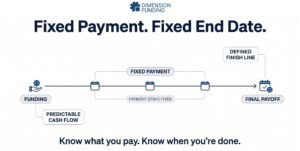
The core mechanic of a line of credit is simple: you draw funds against your available limit, make payments according to your repayment schedule, and as you repay, that credit becomes available to draw again. It behaves less like a traditional loan and more like a reusable financial cushion.

Dimension Funding structures its working capital and line of credit offerings with amounts ranging between $5,000 and $200,000, with terms up to 24 months and repayment plans that can be scheduled monthly, weekly, or daily depending on the business. That repayment flexibility is central to how the draw-repay-draw cycle functions in practice: a business repaying weekly frees up credit sooner than one on a monthly schedule, giving faster-moving businesses quicker access to capital for the next draw.

Why Repayment Structure Shapes How Often You Can Draw

The repayment plan you choose doesn’t just affect your periodic obligation, it directly affects how quickly your credit line replenishes. Daily or weekly repayment plans return capital to your available limit faster than monthly plans, which matters if your business cycles through cash needs frequently.

Monthly repayment plans are typically capped at shorter terms and require a stronger credit profile than weekly or daily options, since lenders view monthly structures as carrying more risk over a longer stretch without repayment activity. Businesses with steady, predictable revenue often qualify more easily for monthly terms, while businesses with more variable cash flow may find weekly or daily repayment easier to manage and to qualify for.

What Shapes Approval on a Line of Credit

Approval for a working capital line of credit generally comes down to a handful of core requirements. Most lenders look for annual revenue above a set threshold, majority ownership documentation, and several months of recent bank statements to evaluate cash flow patterns. Larger credit limits typically require deeper documentation, including corporate tax returns for bigger requests.

That fits a broader pattern in how small businesses seek financing. The Federal Reserve’s 2026 Report on Employer Firms found that most applicants were seeking financing to cover operating expenses or pursue an expansion, the same two use cases that drive most line-of-credit draws, rather than financing a single large purchase.

Because the application is a single page supported by bank statements rather than a full financial statement package, approved businesses can often access same-day or next-business-day funding. That speed matters most for the exact kind of unpredictable cash need a line of credit is designed to cover.

Common Ways Businesses Use a Line of Credit

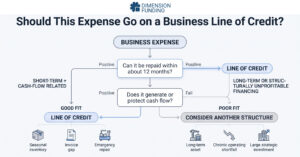
A line of credit isn’t earmarked for one purpose, which is part of its appeal. Businesses use it for daily operating expenses, expanding inventory ahead of a busy season, or covering payroll during a temporary cash flow gap. Because it’s reusable rather than a one-time disbursement, it tends to function as an ongoing safety net rather than a single financial event.

Seasonal businesses often draw on a line of credit during slower months and repay it as revenue picks back up, resetting the cycle for the next slow stretch. Other businesses use it opportunistically, drawing funds to take advantage of a bulk purchase discount or an unexpected growth opportunity, then repaying quickly once the resulting revenue comes in. The reusability is what separates a line of credit from a fixed-term loan built around a single need.

Avoiding the Most Common Line of Credit Mistakes

The most common misstep with a line of credit is treating it like free-flowing cash rather than a financial tool with a cost attached. Drawing repeatedly without a clear repayment plan can leave a business carrying balances longer than intended, eroding the flexibility that made the line appealing in the first place.

Another frequent mistake is choosing a repayment schedule that doesn’t match the business’s actual cash flow. A seasonal business locked into a monthly repayment plan may struggle during its slow months, while a business with daily revenue that chose monthly repayment may be paying for flexibility it doesn’t need. Matching the schedule to your real cash flow pattern, and drawing only what you have a clear plan to repay, keeps the credit line working in your favor rather than against you.

Capital That Moves at Your Business’s Pace

A working capital line of credit isn’t about solving one problem; it’s about staying ready for the next one. Draw when you need it, repay on a schedule that fits your cash flow, and let that credit become available again for whatever comes next. Dimension Funding offers working capital and line of credit financing between $5,000 and $200,000, with terms up to 24 months, same-day or next-business-day funding, and a single-page, bank-statement-based application. Contact Dimension Funding to see what your business qualifies for.

FAQs

How is a line of credit different from a working capital loan?

A line of credit gives you a revolving credit limit you can draw from repeatedly, while a term loan provides a single lump sum repaid on a fixed schedule. Both can support day-to-day business needs, but a line of credit is designed for repeated, ongoing use.

If my business has never used a line of credit before, how do I know what limit to request?

A useful starting point is your typical monthly cash flow gap during your slowest stretch, rather than the largest expense you can imagine. Requesting a limit close to what your bank statements can support tends to move through underwriting faster than an amount that looks disconnected from your actual cash flow.

Can I have a line of credit and a term loan at the same time?

Yes. Many businesses carry both, using a term loan for a defined, one-time need and a line of credit for the ongoing, unpredictable gaps that come up in between. The two products aren’t mutually exclusive and often work well together.

What happens if I don’t use my line of credit for several months?

Unused capacity generally just sits available at no cost, though some lenders periodically review inactive lines to confirm the facility is still needed. There’s typically no penalty for going a stretch without drawing on it.

What repayment schedule should I choose?

The right schedule depends on your cash flow pattern. Daily or weekly repayment tends to suit businesses with frequent revenue, while monthly repayment may fit businesses with steadier, less frequent cash flow, though it typically requires a stronger credit profile.

Does drawing on a line of credit affect my ability to qualify for other financing later?

It can factor into how a future lender views your overall debt load, since most underwriting looks at existing obligations alongside new requests. Keeping your line’s balance from sitting near its limit for extended stretches generally supports a stronger position for future applications.

Can I use a line of credit for any business purpose?

Yes. A working capital line of credit is generally flexible enough to cover daily expenses, inventory purchases, payroll gaps, or unexpected costs, since it isn’t tied to a specific asset purchase like equipment financing.

How Working Capital Business Loans Get Underwritten and Approved

working capital business loans

How Working Capital Business Loans Get Underwritten and Approved

Every business owner has hit the same wall: revenue is strong, but cash isn’t sitting in the bank when you need it. A slow season, an unexpected repair, or a sudden growth opportunity can all create the same problem — timing. Working capital loans exist to close that gap, but most business owners have no idea how lenders decide who qualifies or what shapes the terms they’re offered.


That’s where understanding the process pays off. Dimension Funding has spent over 40 years financing small and mid-sized businesses across the U.S., and its working capital program is built around one core idea: fast, transparent approval without unnecessary paperwork. Knowing how underwriting and approval actually work puts you in a stronger position before you ever submit an application, rather than guessing at what a lender wants to see.

How-Working-Capital-Business-Loans-Get-Underwritten-and-Approved

What a Working Capital Loan Actually Covers

A working capital loan isn’t tied to a specific purchase like equipment or software. It’s designed to support the everyday financial rhythm of a business — payroll, inventory, rent, or bridging a slow month. Because the funds aren’t earmarked, lenders evaluate the loan differently than they would an equipment loan tied to collateral, focusing far more on how money moves through the business than on what it will ultimately be spent on.

That flexibility is exactly why so many businesses use it. Whether it’s a seasonal dip in revenue or a sudden expense that can’t wait, a working capital loan gives owners room to breathe without disrupting long-term plans. A landscaping company might use it to cover payroll through a slow winter, while a retailer might use it to stock up before a busy season. The loan doesn’t dictate the use case; the business does.

What Shapes Approval on a Working Capital Loan

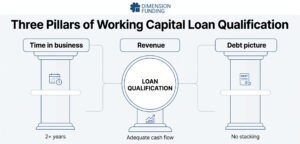
Approval on a working capital loan comes down to a handful of factors: business revenue, time in business, bank statement history, and overall credit profile. Lenders aren’t just looking at a credit score in isolation. They’re looking at cash flow trends over the past several months to gauge repayment ability. A business with steady, predictable deposits will typically move through underwriting more smoothly than one with erratic income, even if both have similar credit scores.

Structured, fixed repayment schedules are common in this space because they give both the lender and the borrower predictability. Businesses that compare financing options often find that a fixed-payment working capital loan is easier to plan around than a merchant credit card cash advance, since payments stay consistent rather than fluctuating with sales volume. That predictability alone often decides which financing option a business chooses, since a steady monthly obligation is far easier to budget around than a variable holdback tied to daily card receipts.

What Underwriters Actually Look at on Your Bank Statements

Many business owners assume lenders only use bank statements to confirm revenue, but underwriting goes much deeper. Bank statements provide a snapshot of how a business manages cash flow over time, helping lenders assess whether loan payments are likely to be made consistently.

Bank Statement Pattern

Why It Matters

Monthly deposits

Demonstrates consistent business revenue

Average daily balance

Indicates whether the business maintains a financial cushion

Negative balance days

May signal cash flow instability or liquidity issues

NSF or overdraft fees

Suggest difficulty managing available funds and may increase perceived lending risk

Large one-time deposits

Often require documentation to verify they are recurring business income rather than unusual transactions

Existing loan withdrawals

Help lenders evaluate current debt obligations and repayment capacity

Rather than focusing on a single credit score, underwriters evaluate the overall pattern of financial activity. Consistent deposits, stable balances, and limited overdrafts can demonstrate responsible cash management even with an imperfect credit history.

This broader approach lines up with the Office of the Comptroller of the Currency’s guidance, which states that for most small business loans, the primary source of repayment is the cash flow of the business, and a bank’s cash flow analysis should cover current and expected cash flows over a reasonable range of future conditions. A business that can show it consistently manages its account well often has more leverage in the underwriting conversation than one relying on credit score alone, as legal industry coverage of small business lending standards has also noted.

Repayment Terms and Structure

Working capital loans typically run on shorter terms than equipment financing, often up to 24 months. Within that window, lenders usually offer weekly, monthly, or daily repayment options, and the right fit depends heavily on the type of business. Choosing the wrong structure can turn a manageable loan into a cash flow strain, even if the terms themselves were competitive.

A seasonal contractor might prefer weekly payments that ease during slow months, while a restaurant with steady daily transactions might choose daily repayment to match cash flow. Matching the repayment schedule to the business’s actual revenue pattern is one of the most overlooked ways to keep a loan manageable, and it’s worth discussing directly with a lender before signing rather than defaulting to whatever structure is offered first.

What Approval Actually Requires

Approval for working capital financing generally hinges on a few baseline requirements. Lenders typically look for annual revenue above a set threshold, majority ownership documentation, and recent bank statements, usually three to six months, depending on the loan size. Larger requests may also require corporate tax returns, since the added scrutiny reflects the larger risk exposure on both sides of the transaction.

The appeal of this financing type is the simplicity of the application itself. Many lenders, including Dimension Funding, use a single-page application supported by bank statements rather than a lengthy financial statement package. That structure is what allows some approvals and fundings to happen same-day or the next business day, which matters most when the need for capital is already urgent.

Why Approval Speed Varies So Much

Not every working capital loan closes at the same pace. Speed depends on how quickly documentation is submitted, how clean the bank statement history looks, and whether the loan amount triggers additional underwriting steps like tax return verification. A request under $50,000 with clean statements moves faster than a $200,000 request requiring deeper financial review, since underwriting depth scales with the size of the exposure.

Businesses that prepare their documents in advance, including recent statements, ownership records, and basic financials, consistently see faster turnaround. It’s less about the lender’s process and more about how ready the applicant is when the application lands on someone’s desk. Gathering bank statements and ownership paperwork before starting the application, rather than after, is one of the simplest ways to shave days off the timeline.

Common Mistakes That Slow Down Approval

Even straightforward applications can stall when a few avoidable mistakes creep in. Submitting incomplete bank statements, applying under the wrong business entity name, or leaving large unexplained deposits undocumented are among the most common reasons underwriting takes longer than expected. Each of these forces a lender to pause and request clarification, adding days to a process that could otherwise move quickly.

Another frequent misstep is applying for an amount that doesn’t align with documented revenue. Requesting $150,000 against inconsistent monthly deposits of $20,000 invites more scrutiny than a request sized appropriately to the business’s actual cash flow. Being realistic about loan size from the outset, and having a clear explanation ready for any unusual transactions, keeps the underwriting conversation short and the funding timeline on track.

Turning Cash Flow Timing Into a Non-Issue

Working capital loans exist to solve a timing problem, not a viability problem, and understanding how underwriting and approval work takes the guesswork out of applying. Revenue history, bank statement patterns, and loan amount all shape the terms you’re offered, but the process itself doesn’t have to be complicated once you know what a lender is actually evaluating.

Dimension Funding offers working capital loans between $25,000 and $250,000, with terms up to 24 months and repayment plans that flex around your business model, backed by same-day or next-business-day funding and a single-page, bank-statement-based application. Contact Dimension Funding to find out what your business qualifies for.

How long does it take to get approved for a working capital loan?

Approval timelines vary based on loan size and documentation, but many lenders can approve and fund same-day or the next business day once bank statements and application details are submitted. Larger loan amounts requiring tax returns may take slightly longer to clear underwriting.

What credit score do I need to qualify?

Most working capital lenders evaluate the whole financial picture, not just credit score. Strong, consistent bank statement history and revenue can offset a less-than-perfect credit profile in many cases, since cash flow often carries more weight than the score itself.

How much can my business borrow?

Working capital loan amounts typically range from $25,000 to $250,000, depending on revenue, time in business, and documented cash flow. Larger requests usually require more extensive documentation, including corporate tax returns.

Does the lender care which bank the business uses, or just the statement history?

Most lenders are agnostic about which bank a business uses and focus entirely on the statement history itself. What matters is a consistent, verifiable record of deposits and balances rather than the specific institution the account is held at.

What do underwriters look for on bank statements?

Underwriters review deposit consistency, average daily balance, negative balance days, overdraft fees, and existing loan withdrawals to gauge overall cash flow health rather than relying on credit score alone.

What documents do I need to apply?

Typically, you’ll need a completed application, three to six months of bank statements depending on loan size, and, for larger requests, corporate tax returns and proof of majority ownership.

If my business has one unusually large deposit, will that hurt my application?

Not necessarily, but it will likely require documentation. Underwriters generally just need to confirm whether a large one-time deposit reflects recurring business income or a one-off event, since unexplained deposits are a common reason applications stall.

Four Steps to Maximize Working Capital Deductions Under the TCJA

Maximize Working Capital Deductions Under the TCJA

Four Steps to Maximize Working Capital Deductions Under the TCJA

Maximize Working Capital Deductions Under the TCJA

As you know, working capital is what’s left of your business funds after factoring in income and costs through the fiscal year—and it can determine whether your business struggles or thrives. That’s why many companies turn to short-term working capital loans when they temporarily need to extend their working capital.

But many businesses fail to take advantage of major tax deductions when it comes to the short-term working capital loans they receive. Why? Because they don’t know that recent bills like the Tax Cuts and Jobs Act (TCJA) make it easier than ever to claim deductions on these loans. That makes short-term working capital loans more financially viable and accessible than ever.

Let’s look at four ways you can take advantage of deductions on your working capital business loan:

  1. Recognize what qualifies as working capital. The good news is that interest paid on nearly any type of business debt can be deducted under the Tax Cuts and Jobs Act and other tax laws. That includes short-term bank loans, other bank loans, lines of credit, real estate mortgages, credit cards or even car loans used for business purposes. Even a personal loan that’s used to cover business expenses can be tax deductible. That also goes for business loans where personal property is used as collateral.
    You must be the party legally responsible for the repayment of that debt for it to qualify. You’ll also need paperwork showing the debt transaction—a UCC-1 statement provided by your bank or creditor is the most effective. Similarly, you must be able to show the IRS that you and your creditor are taking steps to repay the debt. This includes proof of payments and proof of those deposits provided by the lender.
  2. Understand which parts of debt you can deduct. It’s important to remember that only interest on your business debts can be claimed. The principal repayment value of the loan can’t be deducted, since this isn’t considered income earned by your business.
    You also can’t claim a deduction on loan interest until the borrowed money has been put to use. That means it must be spent for a purpose relating to your business, not just kept in the bank. Loaned monies deposited into a bank are considered an investment and thus aren’t eligible for loan interest deductions. They may be eligible for deduction as an investment expense—but you should talk to an expert to see if you qualify under those IRS regulations.
  3. Accurately deduct loans used for personal and business use. Many businesses don’t realize that even interest on personal loans can be deducted as long as some portion of that loan was used for business purposes. You’ll simply need to determine and clearly show which portion of the loan was used for business expenses, and then only deduct that percentage of interest in your tax filing. The same applies for business-centered loans that are partially used for personal reasons.
    For example, let’s say you took out a working capital loan and used it to purchase some equipment. Let’s also say that you use that equipment for personal use around 15% of the time. You’ll be able to deduct 85% of the interest on that purchase, since that’s the amount used for business reasons.
  4. Avoid non-deductible loan expenses. Certain types of debt aren’t eligible for tax deductible interest. These include interest on large loans made off of life insurance policies for employees or owners, as well as interest on loans used to pay taxes or penalties that are owed or overdo. (C-corps are exempt from this rule, as they can claim deductions on tax debt loans.)

If you can learn the best ways to take advantage of business loan payment deductions through tax laws like the TCJA, you’ll be able to save money for your business and ensure that working capital is always available to get you where you’re going. These four steps will put you on the right track to increasing your deductions and decreasing your liability this tax season.

If you’d like to learn more about financing software for your business, contact Dimension Funding today.

FIVE STEPS TO SAVE THOUSANDS ON EQUIPMENT WITH THE TCJA

Save money with the TCJA

FIVE STEPS TO SAVE THOUSANDS ON EQUIPMENT WITH THE TCJA

Save money with the TCJA

In 2017, President Trump signed into law the Tax Cuts and Jobs Act— a sweeping new tax law with far-reaching effects for businesses of all sizes (source: IRS). While pundits will debate its benefits for the nation, what can’t be denied is that it brings huge value to business owners and their bottom lines. Of the $1.5 trillion in lowered tax liability thanks to the TCJA, $950 billion of that number will go to the business sector (source: Ernst & Young).

One of the most powerful impacts of the TCJA is the way it makes Section 179 tax regulations and bonus depreciation work for businesses. The idea of delving into tax law might not thrill you, but if you’re a business owner who’d like to save thousands or even hundreds of thousands on expenses—it should. It’s not as complex as it seems, and the new changes in the TCJA could transform the way you manage equipment costs and other business costs throughout the year.

Steps to Make TCJA Work for You

Here are some steps you can take to make the TCJA changes work for you:

  1. Take time to understand Section 179. Section 179 outlines how businesses can write off the expenses of qualifying equipment in their annual tax filings. The problem used to be that businesses could only write off amounts based on the depreciation of their equipment. If you purchased or financed equipment for $100,000, you might only be able to write-off around $10,000 per year in depreciation.
    With the introduction of the Tax Cuts and Jobs Act, you can now write off the entire cost of most equipment purchased and used during the year—up to as much as $1,000,000 for 2019. The best part is that this write-off even applies to equipment that you lease or finance. We’ll cover that more later, but for now let’s take a look at the types of equipment that qualify under Section 179.
  2. Learn the types of equipment you can expense. The Tax Cuts and Jobs Act not only increased the total cost you can deduct in equipment expenses, it also expanded the types of business equipment whose costs you can deduct (source: Section179.org). If you purchase or finance and put into use any of the following equipment during the calendar year, it can be claimed on that year’s taxes:
    1. Equipment purchased for use by your business, including machines and other physical equipment
    2. Vehicles with a gross vehicle weight (GVW) greater than 6,000 pounds used for your business
    3. Computers
    4. Office equipment and office furniture
    5. Software that has been purchased from a third-party and hasn’t been custom coded for your business
    6. Qualifying equipment that’s used partly for business and partly for personal use; deduction is based on percentage of business use versus personal use
    7. Equipment and property that are attached to your business’ physical building, including large manufacturing machinery or other equipment; structural elements of the building don’t qualify
    8. Non-structural improvements to your existing commercial building, including HVAC or roofing and security systems
      As you can see, a large majority of the equipment you might purchase for your business qualifies for the TCJA’s raised deduction limits. So do your research to ensure that you claim deductions on equipment everywhere you can.
  3. Harness the bonus depreciation increase to 100%. Under the TCJA, bonus depreciation has increased to 100% for 2019. That means that even after you’ve used your Section 179 deduction to lower the purchase price of new equipment, you can take an additional bonus depreciation deduction of 100% of what remains. This 100% bonus depreciation isn’t permanent and will likely be lowered in 2023.
  4. Finance business equipment to boost your bottom line. With the increased power of Section 179 and bonus depreciation thanks to the Tax Cuts and Jobs Act, choosing to lease or finance equipment in 2019 could be more profitable than you can imagine. Think of it this way—you can deduct the full purchase cost of equipment without paying the full purchase price for that equipment. For example, let’s say you finance $50,000 worth of machinery beginning in November of 2019, with monthly payments of $500. By the end of 2019, you’ll have only spent $1,000 on your equipment, but will be able to deduct tens of thousands of dollars—the full price it will cost to finance that equipment.
  5. Qualify and save. Besides falling under one of the categories listed in the Types of Equipment You Can Expense section above, there are a few other conditions your equipment will need to qualify for these deductions and savings. The equipment must be bought and put into use in the year its claimed, and the used equipment must also be new to your business. Similarly, you can’t lease or purchase it from an entity with direct connection to your business.

Beyond these conditions, the equipment can be bought, rented, or financed and still qualify for complete Section 179 and TCJA deductions and bonus appreciations.

Financing equipment for your business rather than paying cash has always been a great way to maintain cash flow for your business. But the TCJA act has radically boosted those benefits by letting you deduct the full cost of that financed equipment during the tax year it was put into use.

Gauging The Growing Pains: The Hidden Costs Of Brewery Expansion

Hidden Cost of Brewery Expansion

Gauging The Growing Pains: The Hidden Costs Of Brewery Expansion

Hidden Cost of Brewery Expansion

As a brewer with a passion for your product, the last thing you want to do is stand still. If you make beers that people love, you everyone to have a chance to enjoy them. There’s no doubt, then, that you’ll expand your sales at the first opportunity. But before you do, you should be aware of the costly challenges that brewers face as they grow larger, including:

Big League Branding

As a local brewer, you had automatic authenticity with your customer base. You understood their culture, cuisine, and drinking habits, and could thus cater directly to them. But as you expand into other markets, you’ll have to start selling to people you don’t know as well. It will thus be an uphill battle getting them to try your beers instead of sticking to their current favorites.

To build authenticity in a community you’re not part of, you will need to conduct comprehensive market research and build a tailored publicity campaign. This strategy is expensive and takes time, so make sure you have access to flexible, affordable working capital to pay for a campaign every time you expand into a new market.

A Cornucopia of Codes

Brewers are subject to a host of health and environmental regulations, and those regulations vary across local, state, and (especially) national lines. Thus the more you expand, the greater your likelihood of running into regulatory issues. Your best bet is to research all the laws and statutes every time you move into a new jurisdiction, and do everything you can to comply with them ahead of time. But this can be expensive, especially if you have to invest in new equipment. Thus make sure you have either the savings or the working capital to make costly investments upfront.

Climbing Capacity

Expanding your operations frequently requires adding production capacity, which means investing in expensive capital equipment. The problem with such investments is that you have to make them months before you achieve any sales in the new market. Consequently, you’ll need to raise a large supply of cash as soon as you make the decision to expand. Unless you have ample cash on hand, working capital is likely the best way to raise this money. Even if you do have cash on hand, you might still want to use working capital, as it will prevent you from tying up all your money in expensive equipment investments.

To learn more about working capital for brewers and countless other businesses, contact Dimension Funding today.

Constraint-Free Construction: The Importance Of Financial Flexibility In The Building Industry

Constraint Free Construction

Constraint-Free Construction: The Importance Of Financial Flexibility In The Building Industry

Constraint Free Construction

Success in business is only possible if you plan ahead, and this is particularly true in the construction industry. Building companies have to deal with a wide variety of contingencies that can suddenly raise their costs or cut their revenues. This creates serious shortfalls, making it essential that you have flexible financing to cover them.

Working capital offers the financial flexibility you need to deal with these problems. By providing cash, they allow companies with few liquid assets to cover cost increases and revenue shortfalls. Thus by maintaining access to working capital, you can survive:

Rising Resource Costs

From wood to drywall to wiring to scaffolding, construction companies need countless resources. Relatively minor changes in commodity prices can send the cost of these resources through the roof. For example, a sudden increase in demand for metal can drive up the price of wiring, scaffolding, and pipes, among other resources. These developments may well raise operating costs above what you’ve budgeted for. Working capital loans let you cover the difference until either the costs fall back down or your revenues rise to match.

Sudden Revenue Shortfalls

No matter how reliable and honest your clients are, there’s always a chance that they’ll fail to pay for your services on time. Even clients who work with you in good faith may still have to deal with financial problems on their end, forcing them to stall payments. If they simply don’t have the money, there’s not much you can do other than wait for them to get it, but you still need to fund your company until they do. Working capital lets you pay for everything while you’re waiting, so that your company doesn’t miss out on future opportunities because of problems with past work.

Inclement Weather

While you likely plan your operations around weather forecasts, storms sometimes travel farther or prove more intense than predicted. This can delay your operations, and thus your payments, for days or even weeks at a time. In the meantime, you’ll have lots of fixed costs that you still need to cover. With access to copious working capital, you won’t have any trouble doing this.

Injuries & Safety Issues

When a worker gets injured, your costs can increase markedly. Not only must you pay for their workers’ compensation, but if the cause of the accident isn’t immediately apparent, you’ll have to stop construction, identify it, and shore it up. With working capital, you can cover all these costs, restore your business to full safety, and get back to work.

For more information on costly contingencies in the construction industry or to obtain the working capital to deal with them, contact Dimension Funding today.

Wagering On Washing: Why Improved Sanitation in Breweries Is A Worthy Investment

Improved Sanitation in Breweries

Wagering On Washing: Why Improved Sanitation in Breweries Is A Worthy Investment

Wagering on Brewery Sanitation

As a brewery, you don’t just have a responsibility to satisfy your customers. You also have to keep them healthy and safe! You understand the importance of sanitation, and the benefits of improving it at every opportunity. By investing in new keg washers and other brewery cleaning equipment, you can obtain the highest standards of sanitation in your industry. This leads to large and lasting benefits, making it one of the best ways to invest in your brewery.

The Benefits of Improved Sanitation in Breweries

While most breweries understand that sanitation is important, there are some who are not aware of the full impact it can have. By purchasing the best possible cleaning equipment and taking full advantage of it, you can:

  • Reduce Interruptions– If one of your customers gets sick from consuming your product, you may need to shut your operations down and fix the problem. Your costs will thus increase even as your revenues grind to a halt. Investing in better sanitation equipment reduces both the frequency and the severity of these interruptions, bolstering your company’s finances.
  • Build a Better Brand– By buying the most advanced sanitation equipment on the market, you go beyond other breweries and establish yourself as a leader in cleanliness. This causes customers to trust you above your competitors, leading to greater loyalty and more consistent sales.
  • Prepare for Future Standards– What is considered advanced sanitation tech today will become the industry standard down the road. By adopting this technology now, you have more time to adapt to it, allowing you to incorporate it more effectively and with fewer disruptions.

Through these and other benefits, investing in the most effective cleaning equipment pays for itself many times over.

How Working Capital Helps You Invest in Cleanliness

Even after learning all the benefits of advanced sanitation, many companies are hesitant or unable to invest in it due to simple cost constraints. Cleaning equipment is expensive, and all but the largest brewers lack the cash to buy it outright. Thus when new devices become available, many brewers must slowly save up money before they can buy them.

Working capital loans let you skip the saving and start cleaning. They provide generous funding for new equipment, so you can make improvements now and then pay for them as your costs fall and revenues rise. As a result, you’ll never have trouble staying ahead of the curve on sanitation.

For more information on working capital, financing equipment, sanitation, and other keys to success in the brewing industry, contact Dimension Funding today.

Shocks To The System: Sources Of Disruption In The Brewing Industry

Brewery Equipment Vendor Financing

Shocks To The System: Sources Of Disruption In The Brewing Industry

Sources of Disruption in the Brewing Industry

To paraphrase Murphy’s Law, if there’s a chance that something can go wrong, sooner or later it will. No one needs to understand this maxim better than brewers. The brewing industry has to deal with a wide variety of disruptions that can raise costs, lower revenues, or otherwise threaten production. In order to weather these issues, you must maintain access to a steady source of working capital. This is particularly important if you are dealing with:

Sanitation Scares

No matter how diligent you are about keeping your brewery clean, there’s always a risk that there will be some sort of health or sanitation problem with your product. Often, such problems are the result of issues with your ingredients and other supplies, which you may have had no way of knowing about ahead of time. Regardless of the source, you’ll likely have to stop production for days or even weeks so that you can clean your equipment and replace any contaminated supplies.

Working capital is essential when you’re facing sanitation issues. Not only will revenues fall because you can’t sell your product, but depending on how extensive the cleaning is or how much inventory you have to replace, your costs may increase dramatically. With working capital, you can stay above water financially until your production lines are back up and running.

Climbing Costs

Besides health and sanitation issues, you may have to deal with sudden increases in the cost of key supplies. Perhaps there is a crop failure that reduces the availability of an ingredient that you rely on, driving up the price of remaining stocks. It’s also possible that the cost of maintaining and replacing brewery equipment will rise.

While you can adjust to costs increases by cutting costs elsewhere or raising your prices, it may take time before you are able to fully make up the difference. Working capital lets you keep your business running in the meantime, giving you the breathing room to get your finances in order.

Inadequate Brewery Equipment

Success in brewing means responding to new market opportunities, but sometimes your equipment can hold you back. Say you identify an untapped market for a certain type of beer, but you don’t have the equipment to make it. Unless you can get that equipment, you’ll lose that market to someone else. Working capital allows you to buy new equipment and pursue such opportunities whenever they arise.

Dimension Funding offers working capital and equipment leases for breweries and countless other types of businesses. Contact us today to learn more about how our capital can benefit your company.

Careful Construction: The Importance Of Working Capital To Worksite Safety

Importance of Working Capital to Construction site Safety

Careful Construction: The Importance Of Working Capital To Worksite Safety

Importance of Working Capital to Construction site Safety

Of all the duties that construction companies must fulfill, none is more important than keeping their worksites safe. Not only do such companies have a responsibility to their workers, who face some of the highest workplace injury rates in the modern market, but they must also safeguard anyone else in the area. To keep everyone safe while still running a productive business, you have to make a variety of investments on a regular basis. Working capital is essential for financing all these investments, including:

Quality Construction Uniforms

One of the simplest and most effective strategies for improving employees’ safety is investing in quality uniforms and other workplace gear. Construction uniforms use bright colors and reflective tape to alert workers to each other’s location. They also contain spaces to hold essential tools or attach harnesses. Certain uniforms may improve safety in particular climates. For example, if you do construction work in the American South during the summer, you’ll need gear that protects employees from heat and sun exposure.

Quality uniforms don’t come cheap, and if you need to rapidly expand your labor force or replace a large number of worn gear all at once, it may be hard to cover the cost from your ordinary revenues. Working capital allows you to pay for new uniforms whenever you need them, ensuring your employees have the gear necessary to stay safe at all times.

Effective Construction Equipment

From scaffolding to harnesses to precise measurement tools, quality construction equipment is critical to the well being of your employees. For maximal safety, it is essential not just to buy and use this equipment, but to replace it with more advanced equipment at every opportunity. These investments are almost always highly expensive, and only pay for themselves over long periods of time. Working capital will let you cover such costs now, achieving immediate improvements in employee safety.

Training Updates

No matter what uniforms and equipment they have to work with, employees can only stay safe if they have the necessary skills. You thus have to offer them periodic training courses that cover basic construction site safety while updating workers on any new gear or equipment they have to work with. Working capital may be necessary in order to obtain the best possible training instructors, software, and other resources. You may also need it to pay for lost productivity, since your employees will have to take time off work while training is going on.

Whether you’re looking to buy new equipment, update your uniforms, or pay for training courses, Dimension Funding has the working capital you need. For more information on providing a safe, efficient workplace, visit our website today.

Sanitation Service: How Working Capital Helps You Keep Your Brewery Clean

How Working Capital Helps with Brewery Sanitation

Sanitation Service: How Working Capital Helps You Keep Your Brewery Clean

How Working Capital Helps with Brewery Sanitation

Of all the challenges that brewers face, none are more important than the need to keep your operations clean. As a brewing company, you have a responsibility to protect your customers and employees against diseases, harmful chemicals, and anything else that could impact their health. But it’s only possible to protect them if you have advanced brewery cleaning equipment, and small companies often lack the resources to invest in such devices. Working capital lets you make the investments necessary to keep your employees and customers safe and healthy.

Shoring Up Brewery Sanitation with Working Capital

Working capital gives you the money you need to make instant improvements in your brewery. This lets you raise sanitation levels on multiple fronts, including by:

  • Expanding Your Equipment– Keg washers and other advanced sanitation devices allow you to clean your brewing equipment more thoroughly and more quickly. With working capital, you will be able to buy this equipment as soon as you go into business. You can also update it whenever more advanced cleaning equipment becomes available, so that you can achieve continuous improvements in sanitation throughout your time in business.
  • Enhancing Maintenance Activities– Besides investing in quality equipment in the first place, working capital gives you the funding to conduct more inspections and repairs on that equipment. This ensures that you can continue cleaning your brewery effectively over the long haul.
  • Improving Your Ingredients– Health and sanitation are closely linked to the quality of the ingredients you use. Working capital gives you the financial flexibility to invest in the best possible ingredients, as well as the facilities to preserve them. This decreases the chance that anything will go wrong with the inputs you use.

In addition to helping you avoid sanitation issues in the first place, working capital makes it easier for your brewery to weather them when they do occur. Say that you discover there is something wrong with a batch of beer you produced. You will need to recall all that beer and stop production until you can figure out and eliminate the cause of the problem. All these damage control activities are highly expensive, making it harder for smaller companies with few savings to weather them. Working capital allows you to stay afloat financially until you have the problem under control and can get back to selling your brews.

Dimension Funding offers flexible working capital for breweries of all sizes, as well as insight into all the ways this funding can enhance your company. For more information or to request our services, visit our website today.