Manufacturing Equipment Financing for Dealers | Dimension Funding

Manufacturing Equipment Financing for Dealers

Manufacturing Equipment Financing for Dealers | Dimension Funding

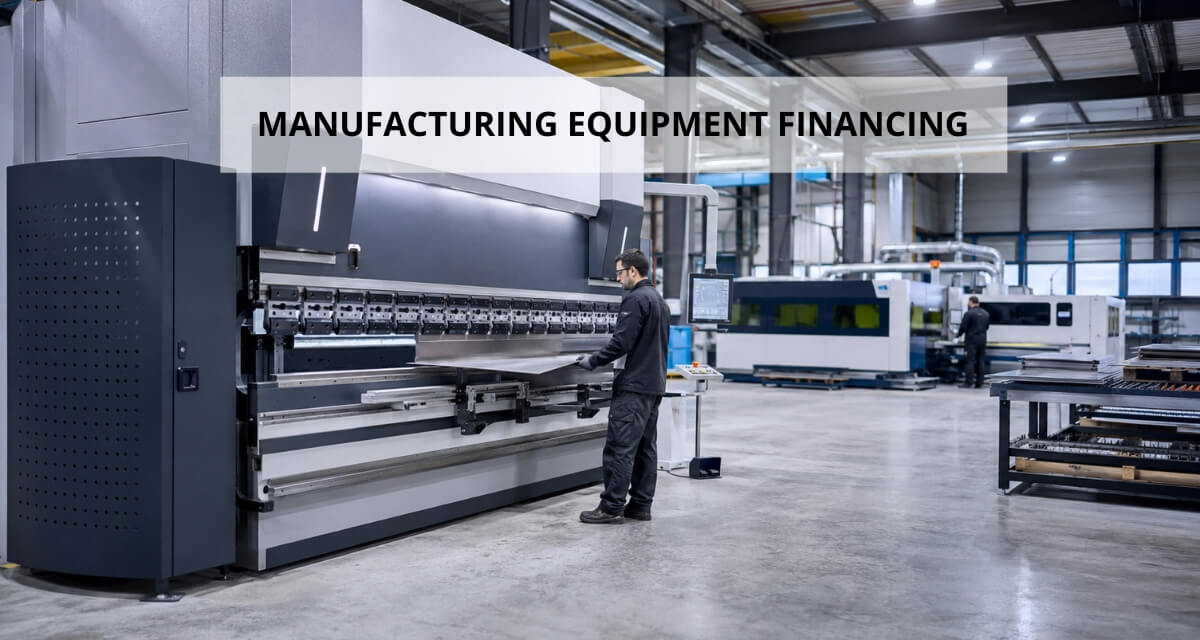
Manufacturing equipment financing lets a dealer offer a monthly payment alongside the quote instead of leaving a buyer to arrange financing on their own after the sale stalls on price.

Dimension Funding works with dealers selling CNC machines, press brakes, injection molding equipment, robotic assembly cells, and material handling systems, financing terms up to 60 months on standard equipment and total capacity extending past $10 million for larger capital purchases.

That range matters more in manufacturing than in most equipment categories, since a single-machine purchase and a multi-machine production line order can sit at completely different scales. 

How Often Manufacturing Equipment Gets Financed 

The Equipment Leasing & Finance Foundation’s 2024 Horizon Report found that 82% of equipment end-users already use some form of financing to acquire equipment and software, and that of the $2.3 trillion in equipment and software investment tracked in 2023, roughly 58% was financed rather than paid in cash.

Industrial and manufacturing equipment specifically ranks among the top five most-financed asset categories tracked by the Equipment Leasing and Finance Association’s Survey of Equipment Finance Activity, alongside transportation, agriculture, and construction. 

How the Dealer Partnership Works Day to Day

The mechanics are designed to stay out of a dealer’s way rather than add a second job on top of selling machines. A dealer quotes the equipment, the buyer submits an application, and once approved, Dimension Funding pays the dealer the full purchase price directly.

That last detail is more important than it sounds. The dealer isn’t carrying the balance, chasing payments from the buyer over the life of the term, or exposed if the buyer’s business hits a rough stretch two or three years in. Dimension Funding’s equipment vendor financing program absorbs the credit decision and the collection risk. The dealer’s relationship with the buyer stays focused on the machine, the install, and the service relationship that follows.

Getting Paid Without the Paperwork Delay

Applications run electronically, and signatures happen through DocuSign, so a deal that’s otherwise ready to close doesn’t sit waiting on paperwork or a signature that has to travel between offices. 

What Qualifies for Financing

Production Machinery

The financeable list covers most of what a manufacturing equipment dealer sells: CNC machining centers, lathes, milling machines, press brakes, laser cutters, waterjet systems, injection molding equipment, stamping presses, welding and fabrication systems, robotic assembly cells, and conveyor or material-handling systems. Both new and used units qualify under the same program, with the same approval process either way.

Delivery, installation, commissioning, and multi-year maintenance contracts can all be consolidated into one monthly payment alongside the machine itself. 

The Software Layer

Machine sales increasingly arrive with a software component attached: control software on the machine itself, or an update to the buyer’s ERP or manufacturing execution system (MES) so it can communicate with the new equipment. Dealers selling that software alongside the hardware, or partnering with a software vendor on the deal, can fold both into one financed transaction rather than presenting them as separate purchases with separate decisions attached.

Software subscriptions are financeable on their own terms as well. Annual SaaS renewals and multi-year MES or ERP licensing agreements can be converted into fixed monthly payments through Dimension Funding’s ERP financing programs, which is increasingly relevant given how many equipment purchases now arrive bundled with a platform subscription rather than a one-time software license.

The US material handling leasing and financing market is projected to grow from $1.54 billion in 2025 to $3.63 billion by 2031, according to Mordor Intelligence, driven in part by automation adoption and the spread of equipment-as-a-service contracts that lower balance-sheet exposure for smaller manufacturers. 

Approval Thresholds and Timelines Dealers Should Know

  • Equipment only: application-only approval, no financial statements required, up to $250,000.
  • Equipment plus software: the application-only threshold rises to $500,000 for the combined transaction.
  • Larger transactions: a streamlined process remains available up to $750,000; above that, buyers provide basic financials, though the review still moves faster than a conventional bank underwriting cycle.
  • Terms: 12 to 60 months depending on deal size and structure, with total financing capacity extending well past $10 million for large capital equipment purchases.

Most approvals come back within hours, and funding typically follows within 48 hours, sometimes the same day. Dealers can run a prospective deal through Dimension Funding’s payment calculator before a sales call, so they walk in with a realistic monthly figure instead of a rough estimate that might not hold up once the buyer starts asking specifics.

Section 179 and Bonus Depreciation, Layered 

The One Big Beautiful Bill Act permanently restored 100% bonus depreciation for qualifying equipment placed in service after January 19, 2025, per IRS Publication 946. Unlike Section 179, bonus depreciation carries no dollar cap and no business-income limitation, which matters for a shop financing a large order in a lower-income year.


Section 179

Bonus depreciation

2026 limit

$2,560,000, phasing out above $4,090,000

No dollar cap

New or used equipment

Both qualify

Both qualify (must be first use by the buyer)

Income limitation

Limited to business taxable income

None

Typical use

Applied first, gives control over which assets get expensed

Covers remaining basis after Section 179, or anything above the 179 cap

The standard approach is to apply Section 179 first, since it lets a buyer choose which specific machines get expensed, then let bonus depreciation absorb whatever falls outside that cap. As always, the specifics belong with a buyer’s accountant, not the sales floor. 

Ready to Add Financing to the Sales Process

Becoming a vendor partner doesn’t require an in-house finance team or an existing lender relationship to bring to the table. The process starts with a vendor partner application, and Dimension Funding builds the program around how a specific dealer sells: typical transaction size, the credit profile of their buyers, and how fast deals generally need to move. Once that relationship is in place, dealers get marketing materials and sales-team support so financing becomes a standard part of every pitch.

A dealer selling mostly new machines, mostly used, or a mix of both doesn’t need a different program for each. The same application and approval process covers a single CNC mill or a phased production line with a software vendor attached. Contact Dimension Funding to see what that looks like for a specific product line.

Frequently Asked Questions

If a buyer defaults, does the machine come back to the dealer or stay with Dimension Funding? 

It stays with Dimension Funding. The financing agreement, not the original sale, governs what happens to the equipment, so a defaulted machine doesn’t become the dealer’s problem to repossess, resell, or otherwise handle. 

Does bonus depreciation apply the same way to leased equipment as it does to a finance agreement? 

Generally, no. Bonus depreciation applies to equipment the buyer owns, so a true lease, where the leasing company retains ownership, typically doesn’t pass the deduction to the buyer the way a finance agreement does. That’s a meaningful distinction to flag to a buyer weighing a large order against both deductions, since assuming a lease carries the same tax treatment as ownership can lead to a surprise at filing time. 

Can a full production line delivered and installed in phases be financed under one agreement, or only single-machine purchases?

Multi-stage projects qualify. Dimension Funding finances entire project costs, including design, implementation, consulting, staff training, and multi-year maintenance and support contracts, not just a single piece of equipment. For larger automation projects specifically, costs like multi-year support and maintenance can be structured as part of Dimension Funding’s early commencement funding program, so a dealer selling a phased line rollout can present the whole project as one financed transaction rather than a series of separate purchases billed as they occur. 

If the equipment and software come from two different vendors, does that change which application-only threshold applies? 

No. The combined transaction still qualifies under the $500,000 equipment-plus-software threshold regardless of how many vendors are involved, as long as it’s submitted as one deal. A dealer working with a separate software or automation vendor doesn’t need to worry about the vendor count itself changing the underwriting tier. 

What credit profiles can a dealer’s buyers have and still qualify?

Dimension Funding works with most credit profiles, from strong Tier A commercial credit down to marginal credit. A buyer with a thinner credit file isn’t automatically disqualified, which matters for dealers selling to newer shops or businesses in a growth phase. Newer businesses without an established credit history are typically asked to provide a business plan or revenue projections in place of extensive financials, and shops with two or more years of operating history and tax returns on file tend to move through approval faster.

Is zero percent financing available on equipment-only deals, or only when a software vendor is part of the transaction? 

It’s specific to the software layer. Zero percent programs on manufacturing deals are structured around a software or automation vendor covering the arrangement, so an equipment-only purchase with no software component wouldn’t carry the same offer. 

If a multi-year maintenance contract renews before the equipment’s financing term ends, does that need a separate financing agreement? 

Not necessarily. A renewal can typically be added into the existing agreement rather than opened as a new one, since it’s an extension of a cost already built into the original financed transaction rather than a separate purchase. 

Construction Equipment Financing for Dealers | Dimension Funding

Construction Equipment Financing for Dealers

Construction Equipment Financing for Dealers | Dimension Funding

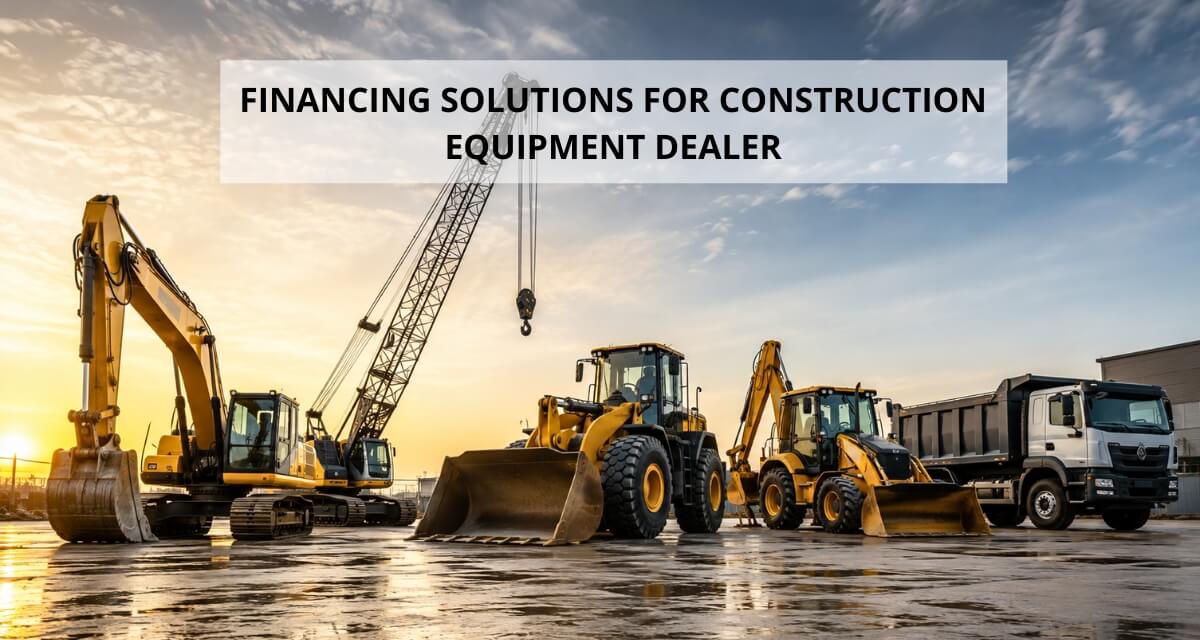
Construction equipment financing lets a dealer offer a monthly payment instead of a lump-sum price, which matters more in this category than most, given how much capital a contractor already has tied up across active jobs.

Dimension Funding has worked with construction equipment vendors and distributors for over 40 years, financing terms up to 84 months on heavy equipment, well beyond what most other equipment categories carry.

That longer-term window changes what a dealer can offer at the point of sale, which matters given how construction compares to other industries: per the Equipment Leasing & Finance Foundation’s Horizon Report, construction end-users were the most likely of any industry surveyed to use financing, at 85%, ahead of health care at 70% and professional services at 66%.

Who Carries the Paper Once a Deal Is Signed 

Dimension Funding underwrites, funds, and services the agreement directly with the buyer and pays the dealer in full once it’s signed. Regardless of term length, the dealer isn’t waiting on that schedule to get paid, and isn’t the one following up on a late payment down the line. 

A contractor who just won a bid often needs equipment moving within days. Quotes typically get processed within an hour or two, funding is usually available the same day once documentation clears, and electronic paperwork through DocuSign closes out the agreement without an in-person signing.

What Dimension Funding Finances for Construction Equipment Dealers

Dimension Funding finances the full range of construction equipment a dealer typically carries:

  • Excavators, including dragline excavators, from compact to full-size
  • Cranes, both new and used
  • Bulldozers, graders, and pavers
  • Dump trucks, pumper trucks, and backhoes
  • Trenchers, loaders, and compactors
  • Telehandlers and feller bunchers
  • Pile boring machines, pile driving machines, and wheel tractor scrapers

Full Deduction the Year the Equipment Goes to Work 

Per IRS Publication 946, businesses can deduct the full cost of qualifying equipment under Section 179 in the year it’s placed in service, rather than depreciating it over several years. For tax years beginning in 2026, the deduction limit is $2,560,000, with the phase-out threshold beginning at $4,090,000 in total qualifying purchases—both figures adjusted upward from 2025’s $2,500,000 and $4,000,000 levels. The deduction applies whether the machine is purchased outright or financed.

A contractor can take the full write-off the year the equipment goes into service while the actual payments stretch out over the term. The specifics for any one contractor’s tax situation should still come from their accountant, not the sales floor.

The Application-Only Ceiling Is Higher Than $250,000

Dimension Funding’s application-only program, which skips financial statements entirely, runs in tiers rather than a single cutoff: 

  • Up to $250,000 for equipment financing alone
  • Up to $500,000 when software or fleet technology is bundled into the purchase
  • Up to $750,000 in application-only financing overall, with financial statements required above that threshold

That $750,000 ceiling covers a meaningful share of mid-size fleet purchases without requiring a contractor to produce financials. It’s easy to mistake $250,000 for the hard limit.

For deals that exceed even that tier, Dimension Funding provides financing up to $10 million or more, with financial statements required to support the underwriting.

New vs. Used Equipment on the Dealer’s Lot

New and used equipment both qualify under the same financing structure. Mordor Intelligence notes that the used construction equipment market is estimated at $132.67 billion in 2026, growing to a projected $174.28 billion by 2031, making it a large enough secondary market that financing pre-owned machinery is routine underwriting.

Service records and a clean maintenance history carry more weight on used equipment. Attachments, delivery, setup, and third-party vendor costs can all go into the same agreement as the machine itself, and a buyer who already knows they’ll want an attachment added later is better off bundling it into the original deal than opening a separate financing conversation down the road.

How Equipment Age Affects Financing Eligibility

Dimension Funding’s age caps on used equipment commonly run 10 to 15 years by equipment type, though older assets can still qualify when they carry strong secondary market demand and documented maintenance histories. Construction machinery fits that second group more often than most equipment categories.

A well-maintained older excavator or crane usually qualifies the same as a newer one, based on service records and hours rather than the year on the title. 

Financing That Starts Before the First Invoice Clears

Dimension Funding’s construction equipment financing program includes a No Payments for 90 Days option on approved credit for new financing. A contractor can take delivery, put the machine to work on a job, and not owe a first payment until roughly the point a client invoice for that job would typically clear.

This is worth raising specifically with a buyer who’s financing equipment against a specific contract or bid, since it lines the payment schedule up with when the job starts generating revenue, rather than starting the clock the day the equipment ships.

What Dealers Get as a Vendor Partner

Vendor partners get a consistent point of contact for underwriting rather than routing each deal through a different desk. That matters more here than in higher-volume equipment categories: a multi-machine fleet order, or anything crossing the $750,000 application-only ceiling, benefits from one person already familiar with the account handling it start to finish rather than starting the conversation over each time.

Much of Dimension Funding’s sales team has been with the company for over 20 years, and the company carries an A+ rating from the Better Business Bureau. Dimension Funding has been financing construction equipment since 1978. Contact Dimension Funding to start onboarding as a vendor partner.

Frequently Asked Questions

If a buyer is trading in an older machine as part of the deal, how does that affect the financing?

A trade-in typically reduces the amount that needs to be financed, since its value gets applied against the purchase price before the agreement is structured. It’s worth confirming with the financing partner early in the process, since the trade-in usually needs to be appraised and settled before the new agreement is finalized, not worked out after the fact. A few things tend to affect how much the trade-in nets the buyer:

  • Documented service history on the trade-in machine
  • Hours or mileage relative to comparable used listings
  • Whether the trade-in is the same equipment category or something the dealer has to move separately

Can a manufacturer rebate or dealer incentive be used alongside financing, or does one cancel out the other?

The two aren’t mutually exclusive. A rebate or incentive generally reduces the purchase price up front, and the financed amount is based on whatever the price comes out to after that reduction. A dealer offering both should make sure the rebate gets applied before the financing paperwork is drawn up, so the buyer isn’t financing a higher amount than necessary. Some manufacturer incentive programs also have their own timing windows, so it’s worth checking whether the rebate needs to be locked in before the financing application goes through rather than after.

Does a dealer with multiple locations need a separate vendor agreement for each branch?

Not necessarily. A vendor partnership is typically set up at the company level rather than per location, so equipment moving through any of a dealer’s branches can usually be financed under the same arrangement. Worth confirming directly if a dealer operates under different business names or ownership structures at different locations, since that can change how the agreement is structured. 

Can equipment that’s been used as a rental or demo unit still qualify for financing when it’s later sold as used?

Yes, and it often has an easier time clearing underwriting than equipment coming from a private sale, since rental fleets tend to keep better records. A few things that typically strengthen an application on a former rental or demo unit:

  • Full service and maintenance logs from the rental fleet
  • Total hours of use, since rental equipment often runs harder than owner-operated machines
  • Confirmation of the original in-service date, since a demo unit’s age isn’t always obvious from a title alone

If a contractor is based in a different state than the dealer, does that complicate the financing?

Not typically. Financing is handled between the buyer and the finance company directly, so the buyer’s location doesn’t need to match the dealer’s. What matters more is where the equipment is being put to work and registered, which is worth confirming case by case for larger vehicles or machinery subject to state-specific registration rules. This comes up often with dealers who sell to contractors bidding on out-of-state infrastructure projects, where the equipment may end up registered somewhere other than the buyer’s home base entirely.

Is zero percent financing an option for construction equipment, or is that limited to software?

It’s not limited to software. Dimension Funding’s vendor financing program extends the same zero percent option to equipment vendors, typically structured per deal or per promotion rather than as a blanket policy, which lets a dealer apply it to specific machines or price points instead of every transaction that comes through. 

Does a newer construction business qualify, or does Dimension Funding require an established operating history? 

Two years in business is the general preference, but strong personal or business credit can substitute for a shorter track record. A newer contractor shouldn’t assume they’re automatically excluded from applying. 

Restaurant Equipment Financing for Dealers | Dimension Funding

Restaurant Equipment Financing for Dealers

Restaurant Equipment Financing for Dealers | Dimension Funding

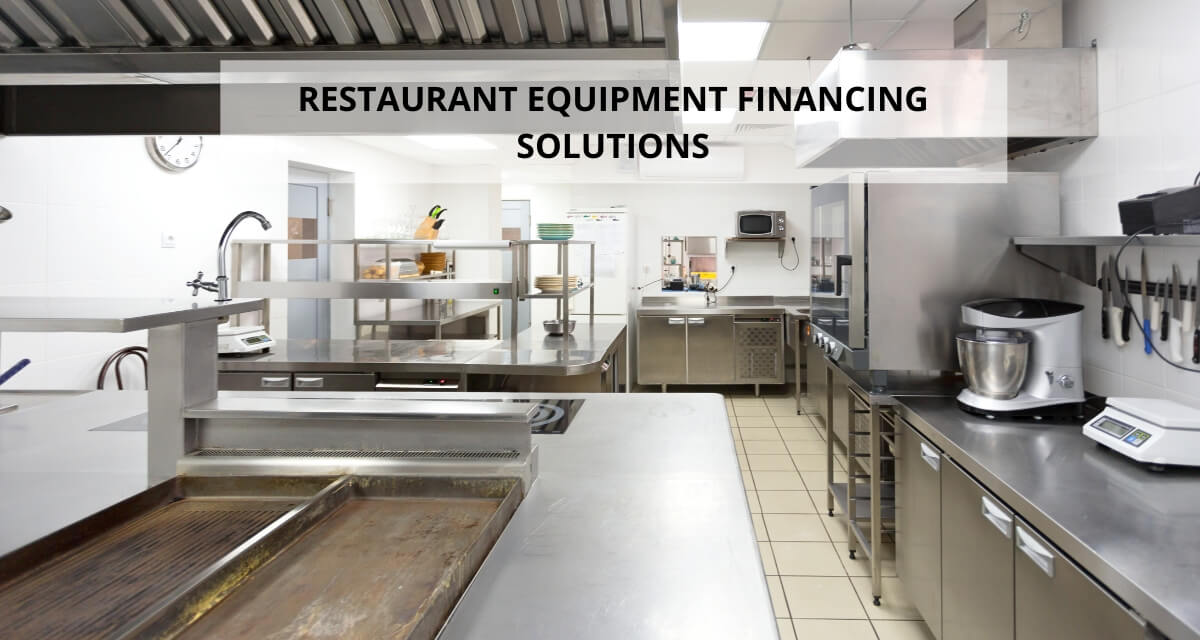
Restaurant equipment financing lets a dealer offer a monthly payment option instead of requiring the full purchase price upfront, covering everything from ranges and walk-in coolers to POS systems and kitchen management software.

Dimension Funding has worked with equipment dealers, manufacturers, and resellers for over 40 years, structuring vendor financing programs that let a dealer present payment terms at the point of sale instead of losing the customer to a walk-off-and-think-it-over moment.

For dealers selling commercial kitchen equipment, POS systems, or kitchen management software, a vendor program changes how a sale gets closed: financing becomes part of the standard pitch, not a fallback raised only after a customer balks at the price.

Why Restaurant Equipment Dealers Are Adding Financing to the Sales Conversation

A dealer who can only offer “pay in full” is competing with one hand tied behind their back against a dealer who can say “here’s your monthly payment.”

Financing is already the default way most equipment gets bought, not a niche add-on a dealer tacks on for hesitant customers. Per the Equipment Leasing & Finance Foundation’s Horizon Report, more than three-fourths of equipment and software buyers expect to use some form of financing on their next acquisition. A dealer who can’t offer it at the point of sale is asking customers to solve a problem most of them assumed was already handled. 

What a Vendor Financing Program Does for a Dealer

A vendor or equipment financing program is not the dealer becoming a lender. Dimension Funding underwrites, funds, and services the financing agreement. The dealer’s role is simpler: present the option, submit the deal, and get paid.

Removing the Cash Objection at the Point of Sale

Dimension Funding covers the delivery, installation, and maintenance costs too, so the customer isn’t stuck juggling separate invoices from separate vendors once the equipment arrives.

Getting Paid Upfront While Dimension Funding Carries the Term

Once a financing agreement is signed, Dimension Funding pays the dealer in full. The dealer is not carrying paper, chasing monthly payments, or absorbing the risk of a customer falling behind. The financing term, and the collection responsibility that comes with it, sits with Dimension Funding.

What Dimension Funding Finances for Restaurant Equipment Dealers

Kitchen Equipment and Beyond

Dimension Funding finances the full range of commercial kitchen equipment a dealer typically sells: ovens, ranges, fryers, walk-in coolers and freezers, dishwashers, prep tables, mixers, and stainless steel workstations, along with front-of-house items like dining furniture and display cases. Food truck financing falls under this same umbrella for dealers who serve mobile food operators alongside brick-and-mortar kitchens. Both new and used equipment qualify, which is useful for dealers who also move refurbished units. 

POS Systems and Kitchen Management Software

Dimension Funding also finances POS systems, kitchen management software, and other technology bundled into a kitchen buildout, including the implementation, training, and third-party vendor costs that come with getting that software running. For a dealer selling a combined hardware-and-software package, that means the entire deal can go through one financing agreement instead of being split across separate purchases.

Software subscriptions are also worth consideration. Annual POS or kitchen management software renewals can create the same cash flow strain as a large equipment purchase when the bill comes due all at once. Dimension Funding can finance those subscription renewals alongside new equipment, which gives a dealer another reason to stay in front of a customer well past the initial sale.

How Application-Only Financing Speeds Up Deals

A dealer submits a proposal or quote directly to Dimension Funding rather than routing the customer through a separate application. Approvals usually come back within a few hours, and the electronic documentation process through DocuSign means the customer signs a handful of pages and the deal is done. Most credit types are accepted, from strong commercial credit down to marginal ratings. 

Using the Payment Calculator During a Quote

Dimension Funding also provides an online payment calculator that estimates monthly payments across different term lengths. Running a few term options live during the conversation gives the customer a real sense of what they’d pay before any formal approval is needed. 

Financing the Buildout Beyond the Equipment Line 

A kitchen buildout rarely stops at the equipment. Permits, initial food and beverage inventory, pre-opening staffing, and marketing costs all hit before a location generates revenue, and none of that shows up on an equipment invoice. Dimension Funding offers working capital loans separately from equipment financing, specifically for those costs.

Product

Covers

Amount

Term

Equipment financing

Equipment, software, delivery, installation, maintenance

Application-only up to $250,000 (equipment) or $500,000 (with software)

Up to 60 months

Working capital loan

Buildout costs outside the equipment line: permits, inventory, staffing, marketing

$25,000 to $250,000

Up to 24 months, with daily, weekly, or monthly repayment

Working capital loans require annual revenue above $150,000, and documentation scales with loan size: three months of bank statements under $50,000, six months at $50,000 and above. Dimension Funding structures daily and weekly repayment options specifically for restaurants and similar cash-flow-driven businesses, rather than the fixed monthly schedule used for equipment. 

What Dealers Get When They Become a Vendor Partner

Marketing and Branding Support

Dimension Funding provides literature and marketing materials that a dealer’s sales team can use directly with customers. Dimension Funding carries an A+ rating from the Better Business Bureau, which is worth mentioning to a dealer weighing which financing partner to bring on. Most new customers come to Dimension Funding through referrals from existing customers, which says something about how those working relationships tend to hold up over time. 

Dedicated Account Management

Vendor partners work with a consistent point of contact rather than a call center. Much of Dimension Funding’s sales team has been with the company for over 20 years, so a dealer isn’t starting over with a new contact every renewal cycle. 

The Tax Case Dealers Can Make to Restaurant Customers

Per IRS Publication 946, businesses can deduct the cost of qualifying equipment and software under Section 179 in the year it’s placed in service, rather than depreciating it over several years, in some cases writing off up to 100% of the purchase. For tax years beginning in 2026, the maximum Section 179 deduction is $2,560,000, with the phase-out threshold beginning at $4,090,000 in total qualifying purchases. These are the inflation-adjusted 2026 figures, up from $2,500,000 and $4,000,000 in 2025, and both new and used equipment qualify. The deduction applies whether the customer pays cash or finances the purchase.

That’s the point worth repeating to a customer: they can take the full deduction the year the equipment goes into service, even while they’re still paying it off month to month. It’s worth bringing up. Leave the actual tax planning to their accountant, not the sales floor. 

Becoming a Vendor Partner

The restaurant and hotel equipment wholesaling industry in the US is an estimated $41 billion market in 2026, according to IBISWorld. Dimension Funding works with equipment manufacturers, resellers, and dealers across that space, providing quoting tools, marketing support, and a dedicated point of contact.

If you’re weighing whether a vendor program fits your sales process, Contact Dimension Funding to walk through onboarding and what it takes to offer financing on your next deal. 

Frequently Asked Questions

Can a dealer finance a mix of new and used kitchen equipment in the same deal?

Yes. Both qualify under the same program, which matters for dealers who sell refurbished walk-ins, ranges, or combi ovens alongside new equipment rather than new-only inventory. A single buildout that mixes a new hood system with a used prep line, for example, doesn’t need to be split into two separate financing arrangements.

If a deal bundles equipment from the dealer with software from a separate vendor, who handles the financing submission?

Whichever vendor brings the deal forward typically submits it to Dimension Funding, regardless of which piece of the bundle they supplied. That keeps a customer from having to manage two separate points of contact for what’s really one purchase. 

Does the $250,000 application-only threshold hold up the same way it would with a bank loan? 

The comparison isn’t really about the number. A bank loan of similar size typically requires a blanket lien across a business’s other assets; Dimension Funding’s equipment financing uses the financed equipment itself as the primary collateral. That’s what keeps the process faster regardless of where a deal falls relative to the threshold. 

Should the financing term match how long the equipment will last?

It’s worth checking. Terms run from 12 to 60 months, and stretching a term past a piece of equipment’s useful life means a restaurant could still be paying on a fryer or walk-in that’s already worn out or been replaced. Matching term length to the equipment, shorter for heavily used cooking equipment, longer for sturdier build-out items, avoids that mismatch.

Is offering zero percent financing an all-or-nothing commitment, or can a dealer choose which deals it applies to? 

Dealers choose. Zero percent programs are typically offered per deal or per promotion rather than as blanket policy, so a dealer can reserve the offer for specific equipment categories or price points rather than extending it to every transaction that comes through. 

If a customer needs both equipment financing and a working capital loan for the same buildout, are they underwritten as one deal or two? 

They’re separate agreements with separate qualification requirements. Equipment financing can qualify on an application-only basis up to $250,000; the working capital loan requires annual revenue above $150,000 and bank statements regardless of amount. A dealer presenting both to round out a buildout should expect two sets of documentation, not one combined approval. 

Why would a restaurant choose daily or weekly repayment on a working capital loan instead of a fixed monthly schedule? 

Restaurants generate revenue daily, and a repayment schedule that pulls smaller amounts more frequently tends to track that cash flow more closely than a single larger monthly payment. Dimension Funding structures working capital loans with that option specifically for businesses like restaurants where revenue doesn’t arrive in a single monthly lump. 

Dental Equipment Financing for Suppliers | Dimension Funding

Dental Equipment Financing for Suppliers | Dimension Funding

Dental Equipment Financing for Suppliers | Dimension Funding

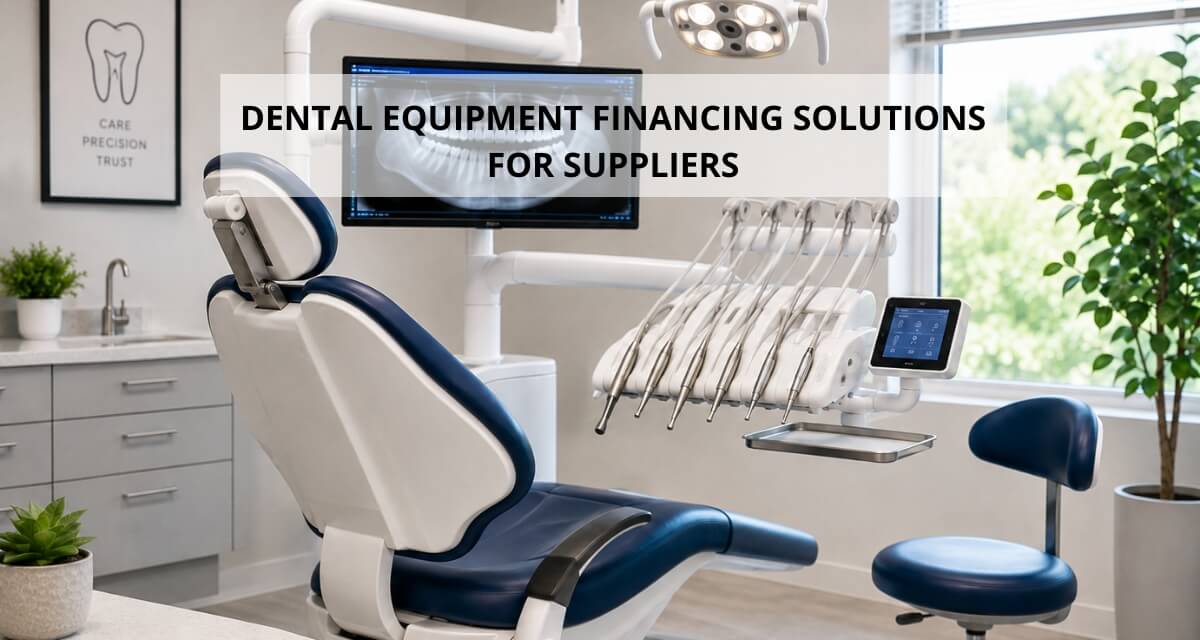
Dental equipment financing for suppliers works through vendor financing built directly into the sale, rather than sending a practice off to arrange payment on its own.

Dimension Funding structures that financing directly through the sale itself, rather than routing the practice to a separate bank application. 

Most businesses buying equipment today aren’t paying cash anyway. The Equipment Leasing & Finance Foundation’s 2024 Horizon Report found that 82% of U.S. businesses used some form of financing to acquire equipment in 2023, in an industry that reached $1.34 trillion that year.

What Counts as Financeable 

Dimension Funding works with dental distributors, device manufacturers selling direct, and practice management software publishers and their resellers. Suppliers who assume financing only covers big-ticket hardware are usually surprised by how far it usually extends.

Equipment and Hardware

Operatory chairs and delivery systems, digital intraoral X-ray sensors, panoramic imaging units, CBCT scanners, CAD/CAM milling machines, intraoral scanners, sterilization and autoclave equipment, dental lasers, and patient furniture all qualify, new or used.

Software and Subscriptions

Practice management platforms, imaging software, and other clinical systems finance the same way hardware does, with implementation, training, and data conversion folded into the same payment rather than billed separately. Mordor Intelligence valued the healthcare SaaS market at $32.22 billion in 2025, growing to an estimated $37.68 billion in 2026, and dental practice management software is part of that shift away from one-time licensing.

A subscription renewal finances the same way as a new purchase, which matters when a practice is facing a five-figure annual bill it wasn’t planning to pay in one shot. Delivery, installation, and third-party vendor costs fold into the same package as well, giving the practice one number to plan around instead of a purchase price followed by add-on invoices weeks later.

Approval and Funding Speed

Most practices don’t need to submit financial statements at all. Dimension Funding’s application-only financing covers up to $250,000 for equipment and up to $500,000 when software’s part of the deal, applied for electronically through DocuSign, with credit decisions typically landing within a couple of hours rather than days.

Here’s the part that matters specifically for suppliers: Dimension Funding pays suppliers in full within 24 hours of funding. There’s no installment collection from the practice and no chasing an invoice three months later, the way financing a sale on net-30 terms means hoping the check arrives on schedule. Revenue from a financed deal shows up on a predictable timeline instead of riding on the practice’s own payment habits.

Newer practices, including a recent graduate opening a first location, can still qualify. A shorter operating history usually just means somewhat more documentation up front compared to an established multi-location group, not an automatic decline. 

Framing It at the Point of Sale

Instead of quoting a $95,000 CBCT system and waiting to see how the practice responds, a supplier can pull up Dimension Funding’s payment calculator and frame the pitch around the monthly number in that same conversation. A manageable monthly payment fitting within the existing budget is a much easier yes to reach than absorbing $95,000 all at once. 

Suppliers ready to make this permanent generally do it one of two ways: becoming a vendor partner, which builds quoting tools and a dedicated contact into the standard sales process the way Dimension Funding’s medical and healthcare vendor program already runs for dental distributors, or simply referring buyers to an application deal by deal, which works fine for suppliers testing the waters before committing further.

Why Dental Equipment Finances Well

Lenders tend to look favorably on dental specifically, for reasons that have little to do with any individual supplier’s sales pitch. Equipment like CBCT units and digital imaging systems holds resale value reasonably well compared to a lot of other commercial equipment categories. Dental practices also generally run on stable, recurring patient revenue that doesn’t disappear during a slow economic quarter the way discretionary consumer spending might.

New Equipment vs. Used

Suppliers moving refurbished units sometimes assume financing gets harder once equipment isn’t new. For dental specifically, that’s mostly not true. Medical and dental devices tend to hold value better than a lot of technology-heavy equipment that depreciates too fast to finance comfortably used, which is why used equipment financing runs on the same terms as new. 

There are a couple of things worth considering once equipment has been used. Documentation carries more weight, so service records, an inspection, and some usage history all strengthen an application. Tax treatment doesn’t change, since used equipment that’s new to the buyer’s practice still qualifies for Section 179 and bonus depreciation the same as new equipment would.

Maintenance and Service Contracts

Equipment isn’t the only thing riding on a financed deal. Extended service contracts and multi-year maintenance agreements can be bundled into the same financing, which matters more for dental than a lot of other equipment categories since CBCT units, sterilization systems, and CAD/CAM machines all carry real ongoing service costs that practices sometimes underestimate at the time of purchase.

For a supplier, combining maintenance into the financed payment does two things at once: 

  • It removes a future renewal conversation that might otherwise go to a competitor servicing the same equipment.
  • It gives the practice one predictable number that covers the full lifecycle of the equipment rather than a purchase price followed by a separate service invoice every year.

This works particularly well when a supplier also handles the equipment’s ongoing service, since it locks in that relationship for the length of the financing term rather than leaving the door open for the practice to shop service contracts separately once the initial purchase is done.

Zero Percent Financing for Dental Suppliers

Grand View Research estimated the global dental equipment market at $11.2 billion in 2023, projecting growth to $17.06 billion by 2030. As that market grows and more suppliers compete on comparable equipment, zero percent financing becomes a way to win the sale without touching the sticker price.

Software suppliers get the most out of this, since those sales often come down to features and price rather than anything physical a practice can put hands on. A practice deciding between two comparable platforms has one less reason to shop around once a zero percent offer is already on the table. Equipment suppliers can offer it too, particularly on higher-margin lines where the sale still pencils out. A supplier interested in setting one up can start with Dimension Funding’s vendor partner application.

The Tax Angle Worth Mentioning

Practices often ask suppliers about the tax side of a purchase. Under Section 179, businesses can generally deduct the full purchase price of qualifying equipment and off-the-shelf software the year it’s placed in service, instead of depreciating it over several years. Per Section179.org, the 2026 deduction limit is $2,560,000, phasing out once total qualifying purchases exceed $4,090,000.

This applies to financed purchases the same as cash purchases, and to used equipment new to the buyer, not just equipment fresh off the floor. Practices should confirm the specifics with their own accountant.

Talking to Dimension Funding

Dimension Funding has been a vendor financing partner for over 40 years, building programs around how each individual supplier sells rather than a one-size-fits-all setup. The setup conversation typically covers what’s being financed, how a vendor partnership would be structured, and how quickly it could be running for the next sale.

Contact Dimension Funding to talk through what that looks like for dental equipment or software specifically.

Frequently Asked Questions

Does the supplier take on any risk if the practice’s payments are deferred or delayed?

No. Under Dimension Funding’s “No Payments for 90 Days” program, a practice can take delivery of equipment or software, install it, and use it for 90 days before its first payment is due, while the supplier is still paid in full at funding. The deferral affects the practice’s payment schedule, not the supplier’s payout timing.

Can the 90-day deferral be combined with the Section 179 deduction?

Yes, and it’s one of the stronger pitches available to a supplier. A practice can take delivery under the 90-day deferral, use the equipment or software immediately, and still claim the full Section 179 deduction for the year the equipment was placed in service, before its first payment is even due.

What happens once a deal goes above the $250,000 or $500,000 application-only thresholds?

Application-only financing remains available for up to $750,000 in many cases, though deals above the standard equipment and software thresholds move to an expedited review that requires some financial documentation rather than a full bank-style underwriting process.

Does a dental service organization financing multiple locations need a separate application for each site? 

Not necessarily. A DSO opening or upgrading several locations can often work through one ongoing financing relationship rather than starting a new application from scratch for every site, which keeps terms consistent across locations instead of varying deal by deal. 

Can a maintenance contract be added to a financed deal after the original purchase, or only at the time of sale? 

It can be added afterward. A practice that skipped a service contract at purchase, then decides it wants one later, can still have it folded into the existing payment rather than being billed for it as a separate ongoing expense. 

Can a trade-in be applied toward used equipment, not just new?

Yes. A trade-in’s value works the same way whether it’s going toward a new or a used purchase, so a practice upgrading to a certified pre-owned imaging system can still apply an existing piece of equipment’s value toward that purchase. 

Can a supplier limit zero percent financing to certain products instead of offering it across the board? 

Yes. It can be scoped to specific equipment lines, software platforms, or deal sizes, which lets a supplier try it on higher-margin products first rather than committing to it on every sale from the start. 

Medical Equipment Financing for Dealers

Medical Equipment Financing for Dealers

Medical Equipment Financing for Dealers

Selling medical equipment or healthcare software rarely comes down to the product alone. It comes down to budget. A practice or hospital department might want exactly what a dealer is offering, but the purchase still has to clear a capital committee, fit inside a fiscal year, or beat out other line items competing for the same dollars. That’s usually what determines whether a sale moves forward or just quietly stalls.

Financing changes that. Instead of sending a buyer off to figure out how they can afford to pay for it on their own, a dealer can bring the answer into the room directly. Dimension Funding has worked with medical equipment dealers, manufacturers, and healthcare software publishers for decades, and the ones who build financing into the sales process tend to close faster and lose fewer deals to budget stalls than those who don’t.

Dealers who want to see how a financing program could work alongside their current sales process can start at Dimension Funding.

Equipment Financing Demand, by the Numbers

The Equipment Leasing & Finance Foundation’s 2024 Horizon Report found that 82% of U.S. businesses used some form of financing to acquire equipment in 2023, in an industry that reached $1.34 trillion that year, with the Foundation’s 2026 outlook projecting another 6.2% growth in equipment and software investment.

Grand View Research valued the global medical imaging market at $43.5 billion in 2025, projecting growth to $45.5 billion in 2026 and $64.7 billion by 2033. For dealers selling into that growth, buyers still ask how they’re going to pay for it. The ones with a financing answer ready close the deal. The ones without get sent to a budget committee to sort it out on their own, and a lot of those deals never come back. 

What Can Be Financed

Dimension Funding works with a wide range of healthcare-adjacent vendors: medical distributors selling into medical, veterinary, and dental markets, device manufacturers selling direct, systems integrators, EHR and EMR publishers and their resellers, rehabilitation equipment dealers, and specialty vehicle manufacturers, among others.

Medical and Diagnostic Equipment

Imaging systems (ultrasound, X-ray, CT, MRI), ophthalmic equipment, lab equipment, respiratory therapy equipment, and surgical equipment can all be financed, new or used.

Healthcare Software

Dealers often think of financing as an equipment-only tool, which leaves money on the table. EHR and EMR platforms, practice management software, imaging software, and other clinical systems can be financed the same way hardware can, with implementation, training, and data conversion costs folded into the same payment instead of showing up as separate invoices later.

Software Subscriptions

The shift to subscription-based healthcare software has picked up real speed. Mordor Intelligence valued the healthcare SaaS market at roughly $32.22 billion in 2025, growing to about $37.68 billion in 2026, as hospitals and practices move off legacy on-premises systems when those contracts expire.

Dimension Funding finances both new subscriptions and renewals, which is important for a vendor trying to close a switch or expansion deal against a practice’s existing contract rather than starting from a blank budget line. 

Technology and IT Hardware

Servers, computers, patient monitoring systems, nurse call and paging systems, telecom equipment, and security systems.

Furniture and Facility Equipment

Exam tables, exam room furniture, waiting room furniture, and similar buildout items.

Delivery, training, and third-party vendor costs can all be included in the same financing; that way a dealer can hand a buyer one predictable monthly number instead of a purchase price plus a string of add-on invoices that show up after the sale closes.

New vs. Used Equipment

Dealers selling refurbished equipment, or manufacturers taking trade-ins, sometimes assume financing gets harder on used assets. For medical equipment specifically, that’s not really true. 

Equipment that has already passed through the steepest part of its depreciation curve holds value more predictably as collateral, which is why used equipment financing is available on the same terms as new. Medical devices like imaging systems, surgical equipment, and patient monitoring equipment tend to fit that profile, unlike technology-heavy equipment that depreciates too fast to hold up as collateral. 

A few things do shift with used equipment:

  • Documentation carries more weight. Service records, an inspection, and verified usage history all strengthen an application.
  • Tax treatment doesn’t disappear. Used equipment that’s new to the buyer’s business still qualifies for bonus depreciation and Section 179.
  • Age can work in a dealer’s favor. Equipment that’s already worked through the steepest part of its depreciation curve tends to look like a more stable asset to a lender, which helps when selling well-maintained used equipment with a clean history.

Application-Only Financing and Qualifying

One practical advantage for dealers: how little documentation most clients need to provide. Application-only financing, meaning no financial statements are required, is generally available up to:

  • $250,000 for equipment purchases
  • $500,000 when software is part of the deal

Larger transactions go through an expedited review rather than a full bank-style underwriting cycle. The electronic application, run through DocuSign, usually means approvals come back within a few hours and funding follows within 48 hours, often the same day. For a dealer trying to close before a buyer’s attention drifts elsewhere, that speed can matter as much as the financing structure itself.

Newer practices in specialties like podiatry, chiropractic, or optometry are generally expected to show a few years of operating history before qualifying, which is worth flagging to a buyer early rather than after an application stalls. 

Setting Up a Financing Program

Dealers generally have two paths here.

  1. Becoming a point-of-sale vendor partner. Financing gets built into the standard sales process, similar to how the medical vendor financing program works. Dealers who go this route get financing quoting tools and a dedicated contact built into their standard sales process, rather than treating financing as something raised only when a buyer asks. 
  2. Referring buyers deal by deal. No formal partnership, just pointing individual buyers toward an application as the need comes up. This works fine for dealers who sell less often or want to test whether financing helps before committing further.

For dealers selling regularly, vendor partnership puts financing into every sales conversation, with quoting tools and a dedicated contact already in place. 

Helping Buyers Avoid the Usual Mistakes

A few financing mistakes come up often enough that they’re worth flagging to buyers before they sign: 

  • Match term length to useful life. Financing equipment over a longer term than it’ll actually be useful means paying on a machine that’s stopped generating value, which comes up often with fast-moving diagnostic technology.
  • Read prepayment and early termination terms closely. Better to know before signing than after a buyer wants to upgrade.
  • Get bundled costs itemized. Shipping, installation, training, and maintenance should all be spelled out clearly in the agreement so nothing shows up as a surprise later.

A Note on Section 179

Buyers sometimes ask dealers about the tax side of financed equipment. Under Section 179, businesses can generally deduct the full purchase price of qualifying equipment and off-the-shelf software in the year it’s placed in service, rather than depreciating it over several years. 

According to Section179.org, the 2026 deduction limit sits at $2,560,000, phasing out once total qualifying purchases exceed $4,090,000. It applies to financed purchases the same as cash purchases, and to used equipment that’s new to the buyer’s business, not just new equipment off the floor. Buyers should still confirm eligibility and timing with their own CPA rather than take a dealer’s word for it.

Getting Started

For dealers and manufacturers still weighing whether this is worth setting up, the best next step is simply to ask. Contact Dimension Funding to talk through what a vendor program would look like for your specific equipment or software line and what the onboarding process involves. The company’s been financing equipment since 1978, and someone on the team can typically tell you within a conversation or two whether the fit makes sense for your business. 

Frequently Asked Questions

How does financing help when a purchase has to clear a capital committee instead of just one buyer’s sign-off?

A capital committee is usually weighing a lump sum against a fiscal year budget that’s already stretched across payroll, supplies, and other equipment requests. A monthly payment is a much easier line item to approve than a single large outlay, and that’s often what gets a purchase through committee instead of getting tabled to next year.

Can a dealer offer financing on a multi-brand equipment package, or only single-manufacturer deals? 

Multi-brand packages are financed the same way as single-manufacturer deals. If a buyer is purchasing an imaging system from one manufacturer and exam room furniture from another through the same dealer, both can sit inside one application rather than requiring separate financing agreements. 

Can a trade-in be factored into a new equipment financing deal? 

Yes. A trade-in’s value can be applied toward a new purchase within the same agreement, which keeps a dealer from having to handle the trade-in as a separate transaction outside the financing structure. 

What documentation should a dealer have a buyer prepare before starting an application?

For deals under the application-only thresholds, buyers typically just need basic business information and an equipment quote. Above those thresholds, having recent bank statements or tax returns ready ahead of time keeps the expedited review moving instead of stalling on paperwork requests mid-application. 

When an imaging system ships with its own software, does that turn into two financing conversations or one?

One, in most cases. The equipment, the software license, and the implementation, training, and data conversion work that comes with getting it running can all sit inside a single agreement. That’s worth knowing because those setup costs on a system like an imaging platform can be substantial on their own, and packaging them into the same monthly payment keeps a practice from getting a separate invoice.

Does a dealer need separate approval for their business versus the buyer’s application?

No. The financing application is tied to the buyer, not the dealer. Dealers don’t need their own credit approval to offer Dimension Funding as a payment option, which is part of why a vendor partnership can be set up without the dealer taking on any financing risk directly.

What happens if a buyer’s practice doesn’t have two years of operating history?

Strong personal or business credit can often substitute for a shorter operating history. Newer practices, including specialties like podiatry or optometry that are usually expected to season longer, can still submit an application to find out what’s available rather than assuming they won’t qualify.