
Compact Track Loader Financing: Rates, Leases & Cost Considerations
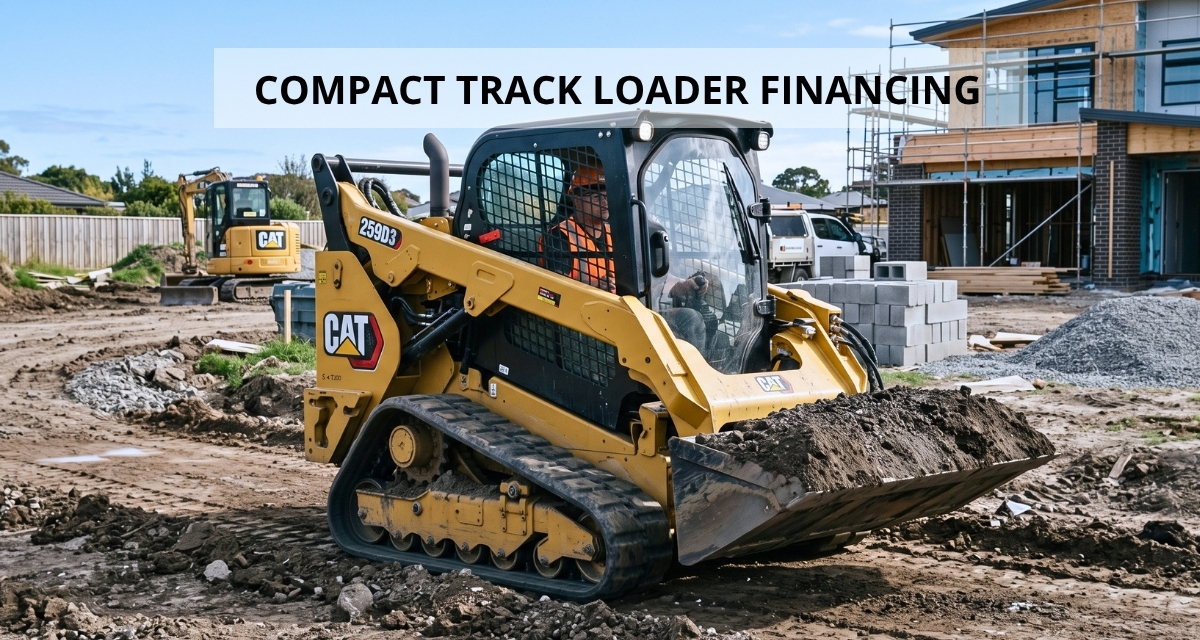
Compact track loader financing exists because the machine costs more than a skid steer to begin with, and running rubber tracks over rough ground adds ongoing costs a wheeled machine doesn’t carry.
New John Deere models alone range from $60,000 to $150,000 depending on size and configuration, according to RDO Equipment’s 2026 CTL pricing breakdown. Add a set of tracks at $2,000 to $4,000 installed, and the total climbs past what most contractors want on one invoice.
Dimension Funding finances construction equipment, including compact track loaders, for businesses across the U.S. Your loan or lease can run up to 60 months, and approval on amounts up to $250,000 can come from the credit application alone, no financial statements required.
Sign electronically, and funding can clear the same day, quick enough that a loader you’re ready to buy doesn’t turn into one you have to keep shopping for.
What Compact Track Loader Financing Covers
A loan builds toward owning the machine outright. A lease spreads the cost of using it over a fixed period instead, and you decide what happens to it once that period ends. Either structure works whether the loader is new off the lot or already has hours on the meter.
Dimension Funding has written equipment financing since 1978. A track loader purchase usually starts with a specific job, not a plan. Soft or sloped ground shows up on a contract, a wheeled machine can’t handle it, and that’s what triggers the order.
Loan or Lease for a Compact Track Loader
The monthly figure can land close either way. What’s different is what you’re left holding when the term ends. A loan finances the purchase, so the machine is yours once it’s paid off. A lease finances the use of it for a set period, and ownership only happens if you buy it out afterward.
Loan | Lease | |
Ownership | Yes, once paid off | Not automatic |
End of term | Loader owned outright | Return, buy out, or upgrade |
Best fit | Work that keeps the machine busy year round | Jobs or terrain needs that shift season to season |
Payment basis | Reflects the full purchase price | Reflects the value used during the term |
How a Loan Works
The lender pays the purchase price upfront. You repay it in fixed monthly installments, and the loader is yours from the day the loan closes, subject to the lender’s lien until the balance clears. There’s nothing to negotiate when the term ends, because you already own the machine.
How a Lease Works
Lease payments get priced against how much value the loader loses during the term, not its full purchase price. That’s why two contractors financing the same model can end up with different monthly numbers if their terms don’t match.
When the lease ends, you can buy the loader at a price set when you signed, hand it back, or move into a newer model. Running the same loader through wet season after wet season is a different bet than trading up for a lower hour machine every couple of years.
Compact Track Loaders vs Skid Steers: Where the Costs Diverge
Tracks are the reason a compact track loader costs more than a skid steer to buy, and more to keep running. Skid steer tires run $150 to $400 each. A set of rubber tracks costs $500 to $1,400 per track, or $2,000 to $4,000 installed as a full set, according to Machinery List’s 2026 track replacement cost guide. Budget $1.50 to $3.00 per operating hour for track wear, since most sets last 1,200 to 2,000 hours before they need replacing.
What you get for that premium is traction. Tracks spread a loader’s weight across a wider footprint, so it holds up on soft, muddy, or sloped ground where a skid steer would spin its wheels or sink.
Skid steers answer back with lower running costs and tighter turns on concrete or compacted gravel, according to Skid Pro’s comparison of the two machine types. Ground conditions decide this one more than price does.
What a Compact Track Loader Costs
Pricing by Size and Configuration
New John Deere compact track loaders range from about $60,000 to $150,000 depending on size and setup, with the 317P around $62,000 and the larger 335P closer to $122,000, according to RDO Equipment’s pricing breakdown. Similar spreads apply across Bobcat, Caterpillar, and Kubota lineups once you compare equivalent horsepower and operating weight.
Cab upgrades add $5,000 to $50,000 depending on climate control and technology. Attachments run $1,500 to $40,000 or more on top of that, per the same source. Start with a $70,000 loader, add an enclosed cab and a grapple, and you’re financing closer to $100,000 by the time it’s all added up.
Where Financing Activity Stands This Year
More than 56,000 new compact track loaders were financed nationwide between May 2025 and April 2026, up 1.2 percent from the year before, according to Equipment World’s tracking of financed sales. Kubota led new financing at 27.1 percent, with Caterpillar close behind after an 18.8 percent jump in volume.
Used financing grew faster, up 8.7 percent to roughly 21,000 units, with Bobcat leading that segment at 23.3 percent. Average used pricing eased to $55,380 in the first quarter of 2026. The typical unit financed was 5.2 years old.
What Changes Your Payment
Term Length and Equipment Age
Push the price up or shorten the term, and the monthly payment climbs. Stretch the term out and it drops, but you risk paying on a machine after the tracks and undercarriage are already worn past their useful hours. Dimension Funding runs terms as long as 60 months, which usually lines up with how long a well maintained loader keeps earning its keep.
Buying New vs Buying Used
New loaders qualify for longer terms, since there’s more working life ahead of them. Go with a used unit, especially one already showing track wear, and the term shortens to match what’s realistically left in the undercarriage.
Approval Requirements for Compact Track Loader Financing
What Moves on the Application Alone
Up to $250,000, the credit application alone is enough for approval, no financial statements needed. That threshold covers most single machine purchases and plenty of two or three loader orders for a growing fleet. Go above it, and underwriting will ask for recent financials before funding closes.
Credit Profiles Dimension Funding Works With
Dimension Funding underwrites credit profiles from strong tier A down to marginal rather than applying one cutoff for every applicant. Approval commonly comes back within hours when the application and signatures are handled electronically, with funding following in a day or two. A used loader at a good price rarely waits around for a slow approval.
Financing That Matches How Long the Tracks Will Last
Every compact track loader starts running down a clock the day it goes to work. Tracks wear toward that 1,200 to 2,000 hour replacement mark no matter what the financing term says, 36 months or 60. Match the term to that clock, not to whichever number drops the payment most. Do that, and you won’t end up paying on a loader that needs a new undercarriage before the loan is done.
Dimension Funding can walk through what financing a specific loader, new or used, looks like against the job it’s buying for. Worth having that conversation before the term gets picked for you by whatever number looks smallest on the quote.
Frequently Asked Questions
Will a lender finance a compact track loader that already has hours on it?
Yes, most equipment lenders finance compact track loaders with hours already logged as readily as units straight off the lot. Used financing grew faster than new financing over the past year, up 8.7 percent versus 1.2 percent, according to Equipment World’s 2025 to 2026 tracking. The term shortens to match whatever working life is left in the undercarriage.
What credit score do I need for compact track loader financing?
There’s no fixed score that decides approval by itself. Dimension Funding weighs your business history alongside personal credit, with programs running from strong tier A down to marginal, and on amounts up to $250,000 that review can happen straight from the application.
How long are typical compact track loader loan or lease terms?
Terms commonly run up to 60 months. Where your loader lands in that range depends on whether it’s new or used and how many hours are already on the tracks, since financing one well past its realistic working life rarely makes sense.
How do I decide between a loan and a lease if my jobs don’t always need a track loader’s traction?
Base the decision on how often the ground calls for tracks, not on the monthly payment alone. Lease if soft, muddy, or sloped terrain only shows up on some jobs, since you avoid paying to maintain tracks between the jobs that don’t need them. Buy outright once that kind of ground shows up often enough to keep the loader working most weeks.
Can attachments and cab upgrades be rolled into the same financing as the loader?
Yes, most lenders bundle attachments and cab upgrades into the same loan or lease as the base machine. That matters here more than with some equipment, since a grapple or an enclosed cab can add tens of thousands to the total cost, and financing the full package keeps the payment tied to what you’re driving off the lot.
How does financing a compact track loader differ from financing a skid steer?
The financing structure is the same, a loan or a lease with terms up to 60 months either way. What changes is the amount, since a compact track loader typically costs more upfront than a comparable skid steer and carries higher ongoing track replacement costs that are worth factoring into the term you choose.
How fast can compact track loader financing be approved?
Approval can come back within hours when the application and signatures are handled electronically, with funding following in a day or two. That turnaround matters most on a used loader, where a specific price on a specific machine tends to move fast once it’s listed.