
Fleet Truck Financing: Custom Options for Fleet Growth & Upgrades
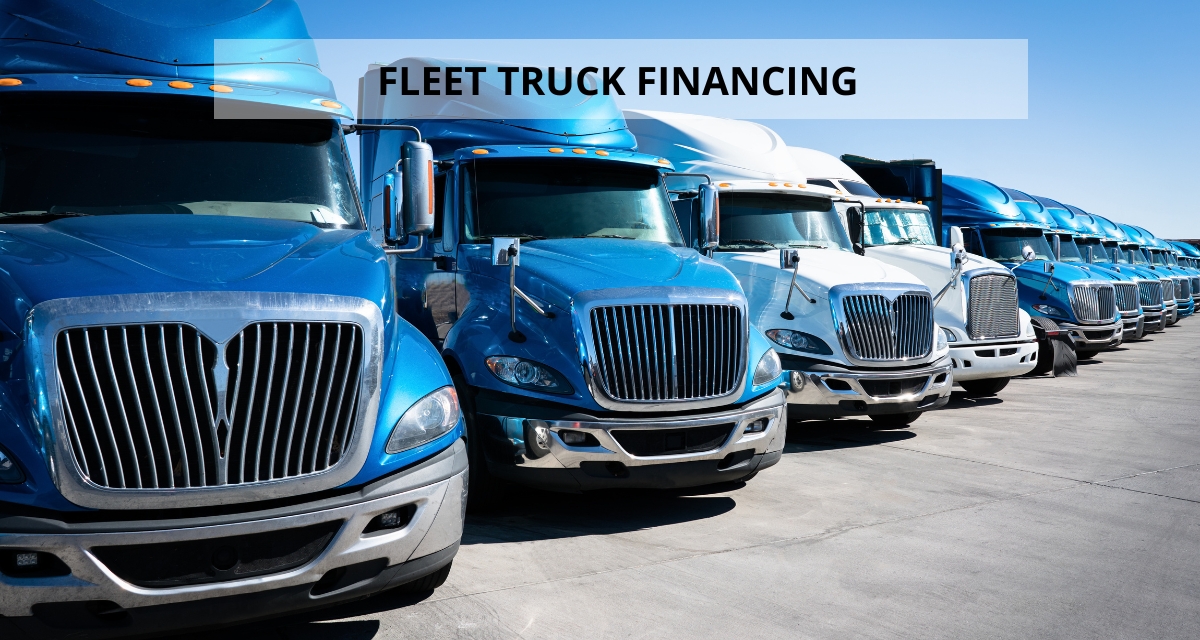
Fleet truck financing turns a six or seven figure purchase into a payment your business can plan around. A single new Class 8 truck can run past $160,000 before it drives a mile, and adding three or four trucks at once multiplies that fast.
Paying that out of cash reserves can stall the growth the trucks were supposed to support.
Dimension Funding finances commercial trucks and trailers for fleets across the U.S., from a single replacement unit to a multi truck build out. Smaller purchases can move on application only approval up to $500,000, while larger fleet financing runs up to $10 million or more.
Sign the paperwork electronically and funding can go through the same day, so a truck you need for a new contract doesn’t sit on a lot while paperwork catches up.
What Fleet Truck Financing Covers
Fleet truck financing covers two structures: a loan that builds toward ownership of each truck, or a lease that spreads the cost of using it over a fixed period. Either one can apply across a mix of new and used trucks in the same fleet.
Dimension Funding has been financing commercial vehicles since 1978. That’s long enough for their underwriting to handle fleet builds that come in phases, three trucks this quarter, two more once a new contract starts, instead of one predictable order.
Loans vs Leases for Fleet Trucks: What Changes
The mechanics differ more than the monthly number on the invoice. A loan finances the purchase, so you own each truck once its term ends. A lease finances the use of the truck for a set period, and what happens when that period ends is where the difference from a loan shows up.
Loan | Lease | |
Ownership | Yes, once paid off | Not automatic |
End of term | Truck is owned outright | Return, buy out, or upgrade |
Best fit | Trucks you’ll run for years | Trucks likely to be rotated or upgraded |
Payment basis | Reflects the full purchase price | Reflects the value used during the term |
How a Fleet Truck Loan Works
The lender covers the purchase price for each truck. You repay it in fixed monthly installments, and the truck is yours from the day the loan closes, subject to the lender’s lien until you pay it off.
Once the last payment clears on a given truck, it’s yours, free to keep running or sell as your fleet’s needs shift.
How a Fleet Truck Lease Works
A lease prices your payment against the truck’s value over the lease term, not its full purchase price. That’s why a lease payment can look different from a loan payment on the same truck.
At the end of the term, you return the unit, buy it at a price set when the lease began, or roll into a newer model.
Neither structure is the automatic right call. A regional delivery fleet that replaces trucks every three years has different priorities than a hauler who wants to run the same truck for a decade.
Why Truck Prices Are Pushing Fleets Toward Structured Payments
What Different Truck Classes Cost
Truck class moves the number more than brand does. A light duty Class 2 or 3 truck runs $45,000 to $90,000 new, and $25,000 to $60,000 used, according to Logrock’s 2026 cost breakdown.
Medium duty Class 4 through 7 trucks land between $70,000 and $160,000 new, with used units running $35,000 to $110,000. A heavy duty Class 8 day cab starts around $130,000 new, and a sleeper cab can run past $300,000 once it’s fully equipped.
The cheapest truck on the lot isn’t always the cheapest to run. The truck that stays on the road and keeps cost per mile predictable tends to win out over the lowest sticker price, according to the same Logrock analysis.
Why Replacement Cycles Are Accelerating
Truck prices haven’t stood still either. The average Class 8 truck cost about $120,000 in 2019, and by 2024 that had climbed to $170,000 to $190,000, according to Crestmont Capital’s financing data. That’s a jump of 40 to 58 percent in five years.
That same Crestmont Capital report puts the average commercial truck on the road today at 12.5 years old. Aging fleets and climbing replacement costs are pushing more of these purchases toward financing instead of cash.
Financing Activity Industry Wide
Trucks move more than 72 percent of all freight tonnage in the U.S. each year. Commercial vehicle loan originations top $120 billion annually, with roughly $600 billion in commercial vehicle loans outstanding nationally, per Crestmont Capital.
Lease and lease to own arrangements account for 30 to 35 percent of new fleet acquisitions industry wide. Spreading a truck purchase into a monthly payment is standard practice in this industry, not the exception.
What Shapes the Monthly Payment
Truck Class and Term Length
A higher purchase price or a shorter term raises the monthly payment. Stretch the term out and the payment drops, but you could end up paying on a truck well past its most productive years.
Dimension Funding runs terms as long as 60 months, long enough to match your schedule to how many years a given truck class realistically has left in it.
New Condition vs Used Condition
A new truck supports a longer term since it has more work ahead of it. Choose used, especially with higher mileage already on it, and you’ll usually get financed over a shorter stretch. The miles on the odometer matter as much as the model year.
What Upfitting Adds to the Financed Amount
Most fleet trucks don’t leave the lot bare. A service body runs $9,000 to $25,000, and a dump body adds $15,000 to $35,000, according to The Upfit Insider.
A plow and spreader setup lands between $9,000 and $28,000, and a crane or mechanic’s body can add $30,000 to $85,000. A refrigerated box for cold chain work runs $18,000 to $40,000, and a roll-off system for waste or recycling work adds $45,000 to $85,000, per the same source.
Buy a $90,000 truck with a $20,000 service body, and you’re financing closer to $110,000, not $90,000.
Roll the upfit into the same loan or lease and the payment reflects the full working truck, not the bare chassis.
Credit Profile and Business Documentation
Fleet truck financing doesn’t always ask for what a bank loan does. Dimension Funding can approve amounts up to $500,000 on the application alone, and works with most types of credit rather than requiring a long, clean financial history.
Larger fleet build outs, the kind that run past that threshold, move into full underwriting, with financing available up to $10 million or more for established fleets.
Growing a Fleet vs Replacing One Truck: How the Financing Picture Changes
New Truck Sales Are Slowing
New Class 8 truck sales fell 24 percent year over year in January 2026, to 12,287 units, according to Transport Topics’ tracking of ACT Research data. Freightliner still led the market that month with 4,314 units, ahead of Peterbilt at 1,918 and Kenworth at 1,798.
Mack and Volvo rounded out the top tier with 947 and 810 units, per the same tracking.
Orders Are Climbing Anyway
January 2026 orders climbed 27 percent year over year to 32,500 units, on top of a 21 percent increase in December. Fleets are ordering ahead of need even while retail sales cool, which points to financing decisions getting made well before a truck shows up on the lot.
Matching the Structure to How the Fleet Runs
The right structure usually comes down to how each truck fits into the fleet, not which option looks cheaper on paper. Adding one truck for a new route has different math behind it than replacing half the fleet at once. A few things tend to settle it:
- Route type matters most. A truck racking up long haul miles daily usually points toward a loan.
- Replacement habits vary a lot. Some fleets rotate the same trucks on a fixed schedule, while others run them until they’re not worth fixing, which tends to favor a lease.
- Resale only comes into play if owning the truck outright is the goal. Otherwise, a truck that’s still running is enough.
Which Way Most Fleets Lean
Run a route daily for years with the same truck, and a loan usually fits. If routes shift, contracts come and go, or you don’t want to be stuck holding aging trucks, a lease usually fits better.
Get the call wrong and it’s rarely a disaster. You end up paying for flexibility you didn’t need, or owning trucks you were ready to rotate out.
Building a Fleet Payment Around the Routes, Not the Sticker Price
A fleet truck earns its cost back by running routes, not sitting on a lot while a business saves up for it. Every week it’s parked is a week the payment has nothing to show for itself.
If your business is planning a fleet purchase or upgrade, Dimension Funding can walk through what a loan or a lease would look like across your specific trucks and timeline. Reach out and talk through the numbers before you commit to either one.
Frequently Asked Questions
Can I finance a mix of new and used trucks in the same fleet order?
Most equipment lenders finance new and used trucks side by side in the same fleet order. Each truck gets underwritten on its own terms, so a newer truck can carry a longer term while a used one on the same order runs shorter, based on how much life is left in each.
What credit score do I need for fleet truck financing?
There’s no single score that guarantees approval. Lenders weigh your business history alongside personal credit rather than applying a hard cutoff. On amounts up to $500,000, Dimension Funding can often make that call from your application alone.
How long are typical fleet truck loan or lease terms?
Terms commonly run up to 60 months. The actual length depends on the truck class, whether it’s new or used, and how long you plan to keep it in the fleet. A longer term brings the monthly payment down, but it also means paying on that truck for more months overall.
Does upfitting get financed along with the truck?
Lenders typically roll upfit costs like service bodies, dump bodies, or plow setups into the total financed amount. That way the payment reflects what the truck can do on the job, not its base price alone.
Confirm this with your lender before the order is finalized, since not every lender handles it the same way.
Is leasing better than buying for a fleet that grows and shrinks with contracts?
Leasing tends to fit fluctuating fleets better, since you’re not stuck holding trucks once a contract ends. A loan makes more sense for trucks running steady, predictable routes year after year.
What happens at the end of a fleet truck lease?
It depends mostly on the mileage and condition of the truck by then. If it’s still got plenty of life left, buying it at the price set when the lease began often makes the most sense.
If it’s worn down, or a newer model would run more efficiently, handing it back or rolling into something newer usually wins out.
How fast can fleet truck financing be approved for multiple trucks at once?
Approval can happen the same day on qualifying applications when documents are signed electronically. That speed matters most when a fleet needs trucks on the road for a contract that’s already started, not one still being negotiated.