
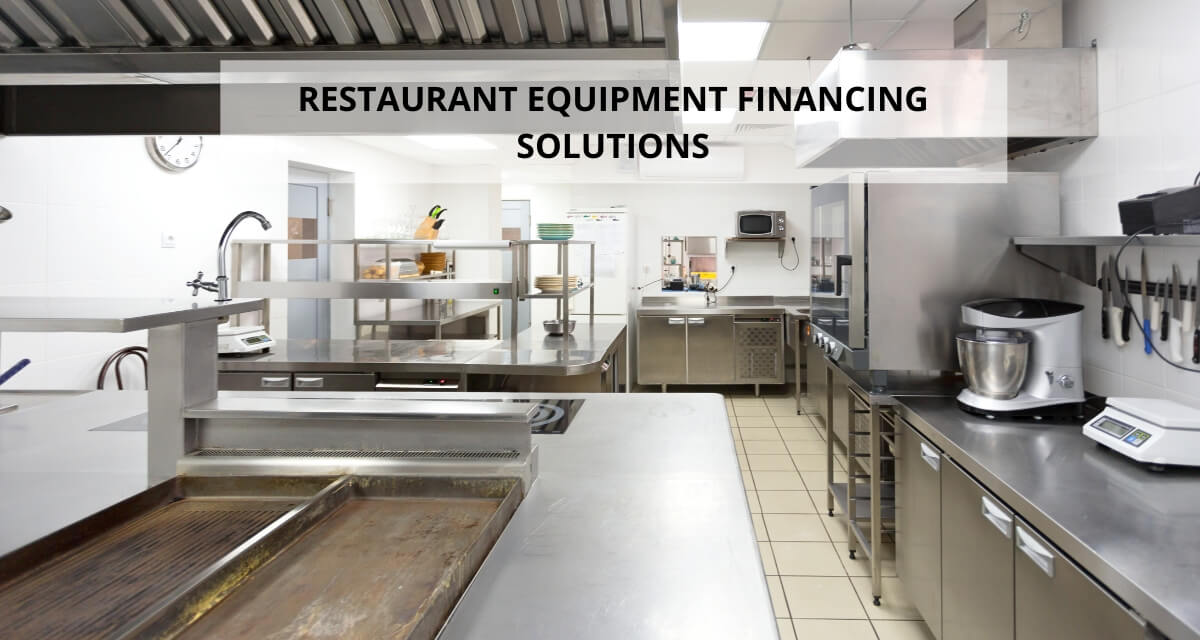
Restaurant Equipment Financing for Dealers | Dimension Funding
Restaurant equipment financing lets a dealer offer a monthly payment option instead of requiring the full purchase price upfront, covering everything from ranges and walk-in coolers to POS systems and kitchen management software.
Dimension Funding has worked with equipment dealers, manufacturers, and resellers for over 40 years, structuring vendor financing programs that let a dealer present payment terms at the point of sale instead of losing the customer to a walk-off-and-think-it-over moment.
For dealers selling commercial kitchen equipment, POS systems, or kitchen management software, a vendor program changes how a sale gets closed: financing becomes part of the standard pitch, not a fallback raised only after a customer balks at the price.
Why Restaurant Equipment Dealers Are Adding Financing to the Sales Conversation
A dealer who can only offer “pay in full” is competing with one hand tied behind their back against a dealer who can say “here’s your monthly payment.”
Financing is already the default way most equipment gets bought, not a niche add-on a dealer tacks on for hesitant customers. Per the Equipment Leasing & Finance Foundation’s Horizon Report, more than three-fourths of equipment and software buyers expect to use some form of financing on their next acquisition. A dealer who can’t offer it at the point of sale is asking customers to solve a problem most of them assumed was already handled.
What a Vendor Financing Program Does for a Dealer
A vendor or equipment financing program is not the dealer becoming a lender. Dimension Funding underwrites, funds, and services the financing agreement. The dealer’s role is simpler: present the option, submit the deal, and get paid.
Removing the Cash Objection at the Point of Sale
Dimension Funding covers the delivery, installation, and maintenance costs too, so the customer isn’t stuck juggling separate invoices from separate vendors once the equipment arrives.
Getting Paid Upfront While Dimension Funding Carries the Term
Once a financing agreement is signed, Dimension Funding pays the dealer in full. The dealer is not carrying paper, chasing monthly payments, or absorbing the risk of a customer falling behind. The financing term, and the collection responsibility that comes with it, sits with Dimension Funding.
What Dimension Funding Finances for Restaurant Equipment Dealers
Kitchen Equipment and Beyond
Dimension Funding finances the full range of commercial kitchen equipment a dealer typically sells: ovens, ranges, fryers, walk-in coolers and freezers, dishwashers, prep tables, mixers, and stainless steel workstations, along with front-of-house items like dining furniture and display cases. Food truck financing falls under this same umbrella for dealers who serve mobile food operators alongside brick-and-mortar kitchens. Both new and used equipment qualify, which is useful for dealers who also move refurbished units.
POS Systems and Kitchen Management Software
Dimension Funding also finances POS systems, kitchen management software, and other technology bundled into a kitchen buildout, including the implementation, training, and third-party vendor costs that come with getting that software running. For a dealer selling a combined hardware-and-software package, that means the entire deal can go through one financing agreement instead of being split across separate purchases.
Software subscriptions are also worth consideration. Annual POS or kitchen management software renewals can create the same cash flow strain as a large equipment purchase when the bill comes due all at once. Dimension Funding can finance those subscription renewals alongside new equipment, which gives a dealer another reason to stay in front of a customer well past the initial sale.
How Application-Only Financing Speeds Up Deals
A dealer submits a proposal or quote directly to Dimension Funding rather than routing the customer through a separate application. Approvals usually come back within a few hours, and the electronic documentation process through DocuSign means the customer signs a handful of pages and the deal is done. Most credit types are accepted, from strong commercial credit down to marginal ratings.
Using the Payment Calculator During a Quote
Dimension Funding also provides an online payment calculator that estimates monthly payments across different term lengths. Running a few term options live during the conversation gives the customer a real sense of what they’d pay before any formal approval is needed.
Financing the Buildout Beyond the Equipment Line
A kitchen buildout rarely stops at the equipment. Permits, initial food and beverage inventory, pre-opening staffing, and marketing costs all hit before a location generates revenue, and none of that shows up on an equipment invoice. Dimension Funding offers working capital loans separately from equipment financing, specifically for those costs.
Product | Covers | Amount | Term |
Equipment financing | Equipment, software, delivery, installation, maintenance | Application-only up to $250,000 (equipment) or $500,000 (with software) | Up to 60 months |
Working capital loan | Buildout costs outside the equipment line: permits, inventory, staffing, marketing | $25,000 to $250,000 | Up to 24 months, with daily, weekly, or monthly repayment |
Working capital loans require annual revenue above $150,000, and documentation scales with loan size: three months of bank statements under $50,000, six months at $50,000 and above. Dimension Funding structures daily and weekly repayment options specifically for restaurants and similar cash-flow-driven businesses, rather than the fixed monthly schedule used for equipment.
What Dealers Get When They Become a Vendor Partner
Marketing and Branding Support
Dimension Funding provides literature and marketing materials that a dealer’s sales team can use directly with customers. Dimension Funding carries an A+ rating from the Better Business Bureau, which is worth mentioning to a dealer weighing which financing partner to bring on. Most new customers come to Dimension Funding through referrals from existing customers, which says something about how those working relationships tend to hold up over time.
Dedicated Account Management
Vendor partners work with a consistent point of contact rather than a call center. Much of Dimension Funding’s sales team has been with the company for over 20 years, so a dealer isn’t starting over with a new contact every renewal cycle.
The Tax Case Dealers Can Make to Restaurant Customers
Per IRS Publication 946, businesses can deduct the cost of qualifying equipment and software under Section 179 in the year it’s placed in service, rather than depreciating it over several years, in some cases writing off up to 100% of the purchase. For tax years beginning in 2026, the maximum Section 179 deduction is $2,560,000, with the phase-out threshold beginning at $4,090,000 in total qualifying purchases. These are the inflation-adjusted 2026 figures, up from $2,500,000 and $4,000,000 in 2025, and both new and used equipment qualify. The deduction applies whether the customer pays cash or finances the purchase.
That’s the point worth repeating to a customer: they can take the full deduction the year the equipment goes into service, even while they’re still paying it off month to month. It’s worth bringing up. Leave the actual tax planning to their accountant, not the sales floor.
Becoming a Vendor Partner
The restaurant and hotel equipment wholesaling industry in the US is an estimated $41 billion market in 2026, according to IBISWorld. Dimension Funding works with equipment manufacturers, resellers, and dealers across that space, providing quoting tools, marketing support, and a dedicated point of contact.
If you’re weighing whether a vendor program fits your sales process, Contact Dimension Funding to walk through onboarding and what it takes to offer financing on your next deal.
Frequently Asked Questions
Can a dealer finance a mix of new and used kitchen equipment in the same deal?
Yes. Both qualify under the same program, which matters for dealers who sell refurbished walk-ins, ranges, or combi ovens alongside new equipment rather than new-only inventory. A single buildout that mixes a new hood system with a used prep line, for example, doesn’t need to be split into two separate financing arrangements.
If a deal bundles equipment from the dealer with software from a separate vendor, who handles the financing submission?
Whichever vendor brings the deal forward typically submits it to Dimension Funding, regardless of which piece of the bundle they supplied. That keeps a customer from having to manage two separate points of contact for what’s really one purchase.
Does the $250,000 application-only threshold hold up the same way it would with a bank loan?
The comparison isn’t really about the number. A bank loan of similar size typically requires a blanket lien across a business’s other assets; Dimension Funding’s equipment financing uses the financed equipment itself as the primary collateral. That’s what keeps the process faster regardless of where a deal falls relative to the threshold.
Should the financing term match how long the equipment will last?
It’s worth checking. Terms run from 12 to 60 months, and stretching a term past a piece of equipment’s useful life means a restaurant could still be paying on a fryer or walk-in that’s already worn out or been replaced. Matching term length to the equipment, shorter for heavily used cooking equipment, longer for sturdier build-out items, avoids that mismatch.
Is offering zero percent financing an all-or-nothing commitment, or can a dealer choose which deals it applies to?
Dealers choose. Zero percent programs are typically offered per deal or per promotion rather than as blanket policy, so a dealer can reserve the offer for specific equipment categories or price points rather than extending it to every transaction that comes through.
If a customer needs both equipment financing and a working capital loan for the same buildout, are they underwritten as one deal or two?
They’re separate agreements with separate qualification requirements. Equipment financing can qualify on an application-only basis up to $250,000; the working capital loan requires annual revenue above $150,000 and bank statements regardless of amount. A dealer presenting both to round out a buildout should expect two sets of documentation, not one combined approval.
Why would a restaurant choose daily or weekly repayment on a working capital loan instead of a fixed monthly schedule?
Restaurants generate revenue daily, and a repayment schedule that pulls smaller amounts more frequently tends to track that cash flow more closely than a single larger monthly payment. Dimension Funding structures working capital loans with that option specifically for businesses like restaurants where revenue doesn’t arrive in a single monthly lump.