

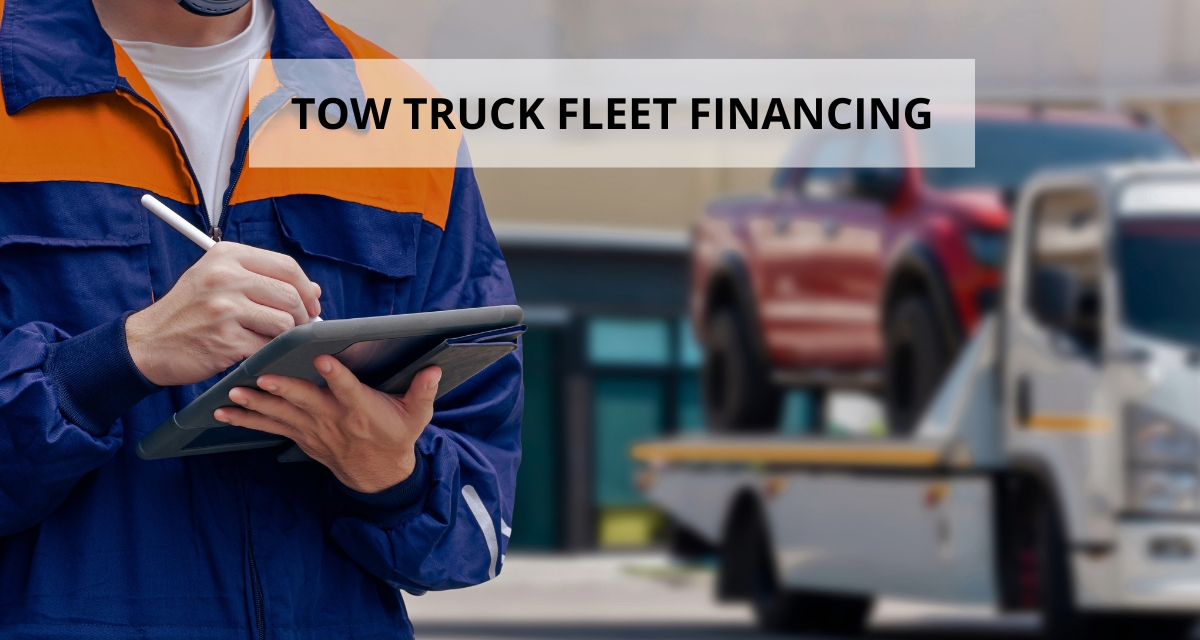
Tow Truck Financing: Fund Flatbeds, Wreckers & Recovery Vehicles
Tow trucks are among the most expensive commercial vehicles a small business can purchase — and one of the most reliably utilized. An estimated 55,000 vehicles are towed daily across the United States, according to lookupaplate.com’s towing industry data, supported by approximately 88 million roadside assistance calls annually. The U.S. automobile towing industry generated $11.3 billion in revenue in 2025, according to IBISWorld, across approximately 39,000 businesses — most of them small, independent operators.
Dimension Funding has provided commercial equipment financing for over 40 years, working with towing operators, recovery businesses, and transportation companies across the country. With same-day approvals, an A+ BBB rating, and application-only financing up to $250,000, Dimension Funding offers a direct path to the equipment your operation needs.
What Tow Trucks Cost in 2026
Tow truck pricing spans a wider range than almost any other commercial vehicle category — from entry-level used units to seven-figure heavy rotators.
New light-duty flatbeds (rollbacks) run $125,000 to $175,000; late-model used units fall between $35,000 and $120,000, per Heavy Equipment Appraisal’s 2026 pricing guide. Medium-duty wreckers run $190,000 to $275,000 new.
Heavy-duty and specialty equipment
Heavy-duty integrated wreckers start around $450,000 for a standard 50-ton unit, with specialized rotators reaching $750,000 to $1 million or more. These assets represent a significant capital commitment — and financing is almost universally how operators acquire them. The global towing equipment market was valued at $2.45 billion in 2022 and is projected to reach $3.72 billion by 2030, reflecting sustained demand for specialized recovery equipment.
Flatbed vs. Wrecker vs. Heavy-Duty: How Truck Type Affects Financing
The type of tow truck you’re financing affects loan amounts, terms, and lender appetite significantly.
Flatbeds are the most financeable entry point — lower cost, broad secondary market demand, and strong collateral value. They serve the widest range of towing jobs and appeal to operators building a first truck or expanding a light-duty fleet. Wreckers carry higher price tags and typically require more business history or stronger credit at comparable terms.
Heavy-duty and specialty equipment
Heavy-duty wreckers and rotators are a different underwriting environment entirely. Lenders financing $500,000+ equipment require stronger documentation — financial statements, revenue history, and evidence of contracts that justify the asset’s utilization. For most operators entering heavy-duty recovery, the financing conversation starts with establishing a track record on lighter equipment first.
Financing Options for Towing Operators
The right structure depends on your equipment type, credit profile, and whether you’re starting out or scaling an existing operation.
Equipment financing
Equipment financing is the most direct and commonly used path for tow truck acquisition. The truck itself serves as collateral, which improves approval accessibility compared to unsecured business lending — particularly relevant for operators with limited business history. Dimension Funding offers terms up to 60 months, 100% financing on qualifying transactions, and application-only decisions up to $250,000 with no financial statements required.
SBA loans
SBA loan programs — particularly the 7(a) — are an option for established towing businesses needing larger financing amounts or seeking longer repayment terms. SBA approval involves more documentation and a longer timeline than equipment-specific financing, but can support larger fleet buildouts or multi-truck acquisitions for qualifying operators.
Working capital loans
For operators bridging cash flow between tow jobs, insurance reimbursements, or impound billing cycles, a working capital loan provides short-term flexibility. Dimension Funding offers terms up to 24 months with daily, weekly, or monthly repayment options — particularly useful for managing gaps between service calls and insurance payments.
What Lenders Look at for Tow Truck Applications
Towing is a service-based business where revenue consistency matters as much as credit score.
Insurance and motor club contracts are among the strongest signals a tow truck application can carry. Documented AAA, Agero, or direct insurance dispatch agreements demonstrate predictable, recurring revenue that spot-call operations can’t match. Municipal or police impound contracts carry similar weight.
Time in business and credit profile
According to the Federal Reserve’s 2025 Small Business Credit Survey, businesses under two years old had a full-funding rate of 28% compared to 57% for businesses with ten or more years of history. The truck as collateral reduces this gap for equipment-secured loans. Operators with strong personal credit, a clear service area, and documented call volume or contract relationships are in the best startup position.
Down payments
Down payment expectations depend on credit profile, equipment type, and business history. Established operators with strong credit may qualify for low or no down payment on qualifying transactions. Newer operators should budget 10–20% down, and heavier specialty equipment — medium and heavy-duty wreckers — may require more given the larger loan amounts involved.
How Tow Truck Businesses Generate Revenue
Understanding the revenue model is essential before committing to a monthly loan payment — and lenders assess it too.
Per-tow fees vary by service type, distance, and local market. Roadside assistance calls (lockouts, battery jumps, tire changes) resolved without a tow are quicker volume but lower ticket. Accident recovery, motor club dispatches, and private property impounds generate higher per-job revenue and often involve insurance billing. Storage fees from impounded vehicles are a significant revenue stream for operators with yard capacity.
The towing segment accounts for 32.2% of the global roadside assistance market — the largest single service category — according to Grand View Research, which values the overall market at $26.58 billion in 2024 and projects it to reach $35.36 billion by 2030. Towing isn’t a peripheral service in roadside assistance — it’s the core revenue driver.
Revenue consistency by contract type
Spot-market towing is more volatile than contract-based work. Operators with motor club agreements, insurance company dispatch relationships, or municipal contracts have more predictable monthly income — and that predictability directly affects how lenders assess repayment capacity. Building contract revenue before financing additional equipment is a sound strategy for both business stability and financing terms.
Tax Benefits Worth Knowing Before You Sign
Financing a tow truck opens up meaningful first-year write-offs that can materially reduce the net cost of acquisition.
Section 179 allows businesses to deduct the full purchase price of qualifying equipment placed in service during the tax year — up to $2,560,000 for 2026 per IRS Publication 946. On a $150,000 flatbed financed over 60 months, a business in a 35% tax bracket could cut its first-year tax bill by $52,500 while spreading the actual cash outlay over time. Used equipment new to your business also qualifies under the One Big Beautiful Bill Act of 2025’s restored 100% bonus depreciation. Confirm eligibility with a tax advisor.
Scaling a Tow Truck Fleet
A single flatbed generates revenue per job but limits how many simultaneous calls you can handle. Adding a second truck expands coverage area, enables parallel dispatching, and opens access to motor club or insurance contracts that often require minimum fleet capacity. The most common mistake is adding a truck before the first is generating consistent net income.
Dimension Funding can finance single units or multiple trucks, depending on deal size. Fleet transactions above $250,000 will typically require financial statements. Establishing clean payment history on the first unit before expanding puts subsequent applications in a materially stronger position.
Financing Your Tow Truck with Dimension Funding
Dimension Funding finances light-duty flatbeds, medium-duty wreckers, heavy-duty recovery vehicles, and specialty equipment for towing operators across the country. Application-only financing is available up to $250,000 with no financial statements required, and most credit types are accepted — including first-time operators and applicants declined by traditional banks.
Contact Dimension Funding to discuss financing options based on your specific equipment, business profile, and timeline — same-day decisions are available on qualifying transactions.
Frequently Asked Questions
How much does it cost to finance a flatbed tow truck?
New light-duty flatbeds typically run $125,000 to $175,000; late-model used units generally range from $35,000 to $120,000. The monthly payment depends on loan amount, term, and down payment. Dimension Funding offers terms up to 60 months with application-only financing up to $250,000 — no financial statements required for qualifying transactions.
Can I finance a tow truck as a startup with no business history?
Yes. Equipment financing is generally more accessible for startups than unsecured lending because the truck reduces lender risk as collateral. Operators with strong personal credit and documented towing experience are in the best position. Having a motor club or insurance dispatch agreement — even a pending one — significantly strengthens a startup application.
What types of tow trucks does Dimension Funding finance?
Dimension Funding finances light-duty flatbeds (rollbacks), medium-duty wreckers, wheel-lift units, heavy-duty recovery vehicles, and specialty towing equipment for operators across all business sizes and credit profiles.
Do motor club or insurance contracts help with financing approval?
Yes, significantly. Documented dispatch contracts with motor clubs (AAA, Agero, etc.) or direct insurance company agreements demonstrate predictable, recurring revenue — which lenders view favorably when assessing repayment capacity. Operators with these contracts in place are in a materially stronger approval position than those relying entirely on spot-market calls.
Can I write off a financed tow truck on my taxes?
Yes. Section 179 allows businesses to deduct the full purchase price of qualifying equipment placed in service during the tax year — up to $2,560,000 for 2026 per IRS Publication 946. The One Big Beautiful Bill Act of 2025 also restored 100% bonus depreciation for qualifying property placed in service after January 19, 2025, including used equipment new to your business. Consult a tax advisor to confirm eligibility for your specific situation.
How is tow truck financing different from financing other commercial trucks?
Tow trucks are specialty vehicles with unique body configurations, hydraulic systems, and equipment specs — and lenders assess them as such. The underwriting emphasis is on the operator’s service area demand, contract relationships, and revenue model rather than freight lane history. Heavy-duty and specialty rotators involve larger loan amounts and typically require financial documentation regardless of the application-only threshold. Light-duty flatbeds generally finance more like standard commercial equipment.
What hidden costs should I budget for beyond the loan payment?
Towing insurance is one of the largest fixed costs — and new authorities typically pay significantly more than established operators. Annual maintenance per truck can run $7,000 to $12,000 under normal use, with major repairs potentially exceeding that. Licensing, DOT registration, and compliance costs add further fixed expenses. Budgeting for these before committing to a loan payment is essential to confirm the operation is viable at your current or projected call volume.