
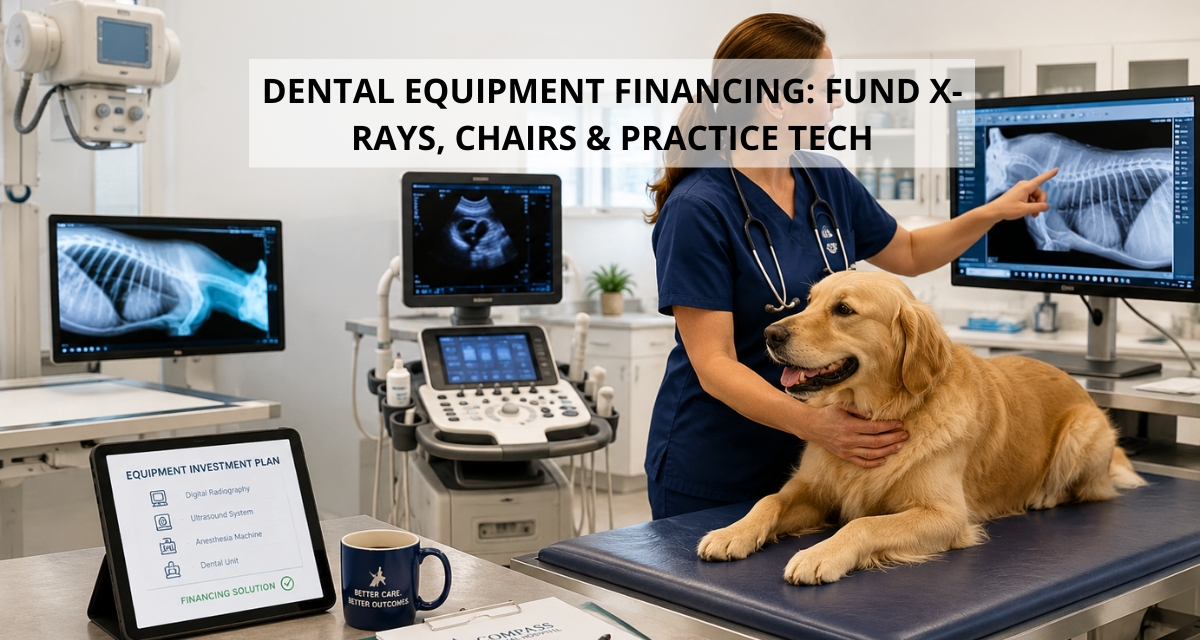
Veterinary Equipment Financing: Diagnostic Tools and Practice Loans
Veterinary equipment financing covers the purchase or lease of clinical tools, diagnostic systems, and facility assets used in a veterinary practice, with a lender advancing 100% of the cost in exchange for fixed monthly payments over a set term.
Dimension Funding has been financing medical and veterinary equipment since 1978, carrying an A+ rating from the Better Business Bureau. Lenders evaluate time in business, practice revenue, the type of equipment being financed, and the applicant’s credit profile. For practices that qualify under application-only thresholds, approvals can move in hours without financial statements.
Applications up to $250,000 require no financial statements, and financing covers not just the equipment itself but delivery, installation, and associated maintenance costs, all rolled into a single fixed monthly payment. Apply for a no-obligation veterinary equipment financing quote through Dimension Funding.
What Veterinary Equipment Financing Covers
Veterinary equipment financing applies to nearly any tangible asset a practice needs to operate and grow. That includes diagnostic imaging systems, surgical equipment, anesthesia machines, dental units, laboratory analyzers, and patient monitoring technology.
It also extends to practice infrastructure: exam tables, sterilization equipment, hospital furniture, and IT hardware used for electronic health records. When multiple vendors are involved, a lender can often bundle the costs from equipment suppliers, third-party installers, and training providers into one financing agreement, keeping a single monthly payment rather than managing several.
Both new and used equipment qualify. A practice buying a refurbished digital radiography unit carries the same financing eligibility as one purchasing a brand-new ultrasound system.
The Equipment Costs Shaping Every Buying Decision
According to the American Veterinary Medical Association (AVMA), there were 34,296 veterinary practices in the United States as of 2023, with approximately 362 new practices added each year since 2010.
The majority are small to mid-sized companion animal clinics where equipment budgets compete directly with staffing, rent, and working capital reserves.
Small-animal veterinary clinics typically allocate between $65,000 and $130,000 for major medical and diagnostic equipment in their first year of operation. That range moves fast once a practice adds imaging.
Diagnostic Imaging
Digital radiography and ultrasound represent the largest single equipment investment most general practices make. Radiography systems led the veterinary diagnostic imaging market with a 35.64% share in 2024, confirming their role as the foundational modality across companion animal practices. Ultrasound units, CT scanners, and digital dental radiography add further capital requirements on top of that.
The global veterinary diagnostic imaging market was valued at $1.27 billion in 2023 and is projected to reach $2.39 billion by 2033, growing at a compound annual rate of 6.7%. For individual practices, that growth translates into consistent pressure to keep diagnostic capabilities current as client expectations and clinical standards advance.
Surgery and Anesthesia
Surgical suites require anesthesia machines, patient monitoring systems, electrosurgical units, and recovery area equipment. Each piece carries its own replacement and maintenance schedule. Annual maintenance and servicing for veterinary equipment typically runs 5 to 8% of the equipment’s purchase value, which means a $100,000 equipment inventory will cost $5,000 to $8,000 per year to maintain.
That recurring cost is a factor financing helps manage. By preserving working capital through fixed monthly payments, a practice keeps its maintenance and replacement budget intact rather than drawing it down to fund an acquisition.
Dental and Laboratory
The American Veterinary Dental Society (AVDS) reports that over 80% of dogs and 70% of cats exhibit signs of dental disease by age three. Dental units, scalers, polishers, and dental radiography systems have become standard in companion animal clinics rather than specialty-only tools. In-house laboratory analyzers, including hematology and chemistry panels, add further capital requirements while reducing diagnostic turnaround time.
How Lenders Evaluate a Veterinary Practice
Lenders assess veterinary financing applications on several factors. Time in business matters: established practices with documented revenue history qualify more easily than startups. Practice revenue, the stability of that revenue relative to local market conditions, and existing debt obligations all feed into the approval calculation.
The equipment itself plays a role. Diagnostic imaging systems, surgical equipment, and laboratory analyzers are tangible assets with clear resale markets, which supports stronger financing outcomes compared to purely consumable expenditures.
Credit profile is reviewed but is not a hard barrier. Dimension Funding accepts most credit ratings, from Tier A borrowers down to marginal credit. For applications under $250,000, no financial statements are required. Applications above that threshold require some financials but move through a structured process rather than an open-ended underwriting review.
Most approvals are issued the same day the application is submitted, with funding often occurring within a few hours or by the next business day.
Financing New vs. Used Veterinary Equipment
Both new and used veterinary equipment qualify for financing through Dimension Funding. Used equipment financing is particularly relevant in veterinary medicine, where a well-maintained digital radiography unit or ultrasound system holds diagnostic value well past its initial purchase date.
The practical consideration with used equipment is condition documentation. Lenders will typically want to confirm the asset is functional, and practices benefit from securing service records before applying. A refurbished system with documented calibration history presents a cleaner financing case than one purchased at auction with no maintenance record.
Financing used equipment also allows a practice to access technology it might not reach at new prices. A smaller single-doctor clinic can access the same diagnostic capability through a quality used unit, financed over a term that aligns with monthly cash flow, without waiting until working capital accumulates to cover a full purchase.
The IRS Section 179 Angle
Veterinary practices that finance equipment during the tax year may be able to deduct the full purchase price in the same year rather than depreciating it gradually. For 2025, the IRS Section 179 deduction limit has been raised to $2,500,000, with a spending cap of $4,000,000 before the deduction begins to phase out on a dollar-for-dollar basis.
Financing through a commercial lender qualifies for Section 179 treatment. A practice that finances a diagnostic imaging system, dental unit, and surgical monitoring equipment in the same calendar year can potentially deduct the entire financed amount in year one, subject to taxable income and business-use requirements. The equipment must be placed in service by December 31 of the applicable tax year.
Dimension Funding maintains a dedicated IRS Section 179 resource page with current year limits and qualifying guidelines. Consult a qualified tax advisor to confirm the deduction applicable to your specific situation.
Ready to Move on Your Next Equipment Purchase
Dimension Funding has provided commercial equipment financing to small and medium-sized businesses across the United States since 1978. For veterinary practices, the program covers 100% of a purchase: equipment, shipping, installation, and maintenance costs can all be bundled into a single financing agreement.
The application is electronic, with DocuSign handling document execution. Approvals typically arrive the same business day. Terms extend up to 60 months, giving each practice control over payment size relative to its cash flow. A practice that is expanding its diagnostic capabilities does not have to choose between equipment access and working capital preservation.
If you are evaluating a diagnostic imaging system, surgical suite upgrade, dental unit, or laboratory analyzer, Dimension Funding’s medical equipment financing program is structured for exactly that acquisition. Submit an application or use the payment calculator to estimate monthly payments before committing to a vendor quote.
Frequently Asked Questions
What types of veterinary equipment can be financed?
Financing covers a wide range of clinical and practice assets, including digital radiography systems, ultrasound machines, CT scanners, anesthesia equipment, surgical monitors, dental units, laboratory analyzers, exam tables, sterilization equipment, and IT hardware for electronic health records. Delivery, installation, and maintenance costs associated with the equipment can typically be bundled into the same financing agreement.
What credit score do I need to qualify for veterinary equipment financing?
Dimension Funding does not publish a minimum credit score requirement. Most credit profiles are accepted, from Tier A borrowers to applicants with marginal credit histories. Applications under $250,000 require no financial statements; above that threshold, some financials are requested as part of a standard review.
How long does the approval process take?
Most applications receive a same-day decision. Funding typically follows within a few hours of approval or by the next business day, depending on documentation requirements.
Can I finance used veterinary equipment?
Yes. Both new and used equipment qualify for financing through Dimension Funding. For used equipment, having service records and calibration documentation in order before submitting an application generally supports a cleaner approval process.
What are typical financing terms for a veterinary practice?
Dimension Funding offers terms up to 60 months. The actual term and monthly payment depend on the financed amount, the applicant’s credit profile, and the equipment type. Practices can estimate monthly payments using the payment calculator on Dimension Funding’s website before applying.
Does financing veterinary equipment qualify for the IRS Section 179 deduction?
Equipment financed through a commercial lender generally qualifies for IRS Section 179 treatment, allowing the full purchase price to be deducted in the year the equipment is placed in service rather than depreciated over several years. For 2025, the deduction cap is $2,500,000. A qualified tax professional can confirm eligibility and calculate the deduction applicable to your practice.
Is there a minimum amount required to apply for veterinary equipment financing?
Dimension Funding does not publish a hard minimum financing amount for veterinary equipment. The $250,000 application-only threshold is the point at which no financial statements are required; applications of any size within that range can be submitted through the standard electronic process without additional documentation.