

HVAC Contractor Financing: Managing Cash Flow & Upgrading Systems

hvac contractor financing

HVAC Contractor Financing: Managing Cash Flow & Upgrading Systems

HVAC contractor financing turns a rooftop unit, a cooler compressor, or a service van into a payment you can plan around, not a lump sum that guts your account right before the busy season hits. A commercial rooftop replacement alone runs $6,000 to $62,000 installed depending on tonnage, according to Oxmaint’s 2026 RTU replacement cost data.

Dimension Funding finances HVAC equipment, refrigeration systems, and the tools that go with them for contractors across the U.S., whether that’s one condenser swap or a truck and unit order tied to a new contract. You can get approved for up to $250,000 on the application alone, with terms stretching to 60 months.

What HVAC Contractor Financing Covers

Rooftop package units, split systems, ductless mini splits, walk-in refrigeration racks, and the sheet metal and diagnostic tools you need for an install all fall under HVAC contractor financing. A loan builds toward owning the equipment outright. A lease spreads the cost of using it over a set period instead.

Dimension Funding has financed HVAC and refrigeration equipment since 1978, long enough for its underwriting to reflect how contractors buy. A compressor today because a unit failed. Three rooftop units next month because a retrofit got approved. Not a fixed replacement calendar.

Loans vs Leases for HVAC Equipment: What Changes

Same monthly number, a different deal once the term ends. A loan finances the purchase, so you own the unit once it’s paid off. Lease that same unit, and you only own it if you buy it separately when the term is up.


Loan

Lease

Ownership

Yes, once paid off

Not automatic

End of term

System owned outright

Return, buy out, or upgrade

Best fit

Systems that run for years

Equipment likely to be swapped as standards shift

Payment basis

Reflects the full purchase price

Reflects the value used during the term

How an HVAC Equipment Loan Works

The lender covers the purchase price of the unit, tools, or vehicle. You repay it in fixed monthly installments, and the equipment is yours from the day the loan closes, subject to the lender’s lien until it’s paid off. No return decision, no buyout negotiation, only ownership at the end.

How an HVAC Equipment Lease Works

A lease prices the payment against how much value the equipment loses over the term, not its full purchase price. That’s why two identical rooftop units can carry different lease payments. When the term ends, you buy the unit at a price set upfront, return it, or move into something newer.

Why HVAC Equipment Costs Push Contractors Toward Financing

The U.S. heating and air conditioning contractor industry pulls in $159.4 billion a year across roughly 120,000 businesses, growing 6.9 percent annually, according to Jobber’s 2026 HVAC industry data. That growth is colliding with two things at once, equipment prices that keep climbing and a refrigerant standard pulling older systems out of the replacement pool for good.

What Different HVAC Systems Cost

Installed rooftop unit costs run $2,800 to $3,500 per ton for smaller commercial systems, and $1,800 to $2,500 per ton once you’re into larger installations, according to Oxmaint’s 2026 RTU replacement cost data. A 15 to 20 ton retail unit runs $24,000 to $41,000 installed, and a 25 to 30 ton system for a manufacturing floor reaches $38,000 to $62,000.

Split system equipment alone typically runs $800 to $3,000 per ton, averaging around $1,500, according to Pick Comfort’s 2026 commercial HVAC pricing guide. Add crane mobilization, curb adapter work, and electrical upgrades, and your installed total climbs well past whatever number was on the initial quote.

The Refrigerant Transition Is Adding to the Bill

Equipment running R410A refrigerant, anything with a global warming potential above 700, could no longer be sold or installed new as of December 31, 2025, under EPA phasedown rules, according to Contracting Business’s 2026 coverage of the transition. Commercial products get until January 1, 2027 before the same deadline hits them.

Steel and copper prices have climbed roughly 40 percent over the past year, pushing material costs up another 4 to 5 percent in 2026, per the same coverage. That leaves you financing replacement systems on a tighter timeline than any planned upgrade cycle would allow.

What Shapes the Monthly Payment

System Type and Term Length

A higher purchase price or a shorter term raises your monthly payment on a rooftop unit. Stretch the term out and the payment drops, but you could end up paying on a system past the point a refrigerant change makes replacement worth it. Dimension Funding caps terms at 60 months, which tracks how long a system stays useful.

New Condition vs Used Condition

A new unit supports a longer term since it has more working life ahead before refrigerant rules or efficiency standards catch up to it. Go with used equipment, especially an older unit still running R410A, and your financing term shortens to match the years it has left.

Managing Cash Flow As an HVAC Contractor

Cash flow for an HVAC contractor rarely moves in a straight line. A commercial install pays out in milestone draws, a residential emergency call pays on completion, and payroll for the crew running both jobs goes out the same Friday no matter what.

Financing separates the equipment purchase from the job’s payment schedule. Buy a unit in March against a retrofit that pays out over four milestone draws through June, and it stops competing with April’s payroll for the same dollars. A few pressure points show up more than others:

  • Slow shoulder season stretches followed by a rush of summer or winter calls
  • Commercial jobs that pay in milestones, weeks behind when material and labor bills come due
  • A compressor that has to go in today, before the customer’s deposit even clears

Approval Requirements for HVAC Contractor Financing

Application Only Thresholds

Purchases up to $250,000 can move on the credit application alone, no financial statements required. That threshold covers most single rooftop replacements, refrigeration retrofits, and tool or vehicle additions you’ll finance in a given year. Go above it, and underwriting will ask for recent financials.

Credit Profile and Approval Speed

Dimension Funding works with credit profiles from strong tier A down to marginal, not one hard cutoff for everybody. Approvals commonly turn around the same day, with funding in two to three business days. Financing can also include a 90 day payment deferral, so the system gets installed and earning before your first payment comes due.

Matching the Purchase to the Job It’s Paying For

A rooftop unit crated on a truck isn’t earning you anything. Neither is a van sitting at the dealership waiting on a signature. The sooner a system is running, or a truck is on its first call, the sooner that payment starts looking like the reason the job got done instead of a bill hanging over it.

Dimension Funding can walk you through what financing a specific rooftop unit, refrigeration retrofit, or service vehicle would look like before you sign anything. Talk to them before your next customer call turns into an equipment order that has to happen this week instead of next quarter.

Frequently Asked Questions

Can I finance equipment I’m installing at a customer’s property, or only equipment for my own shop?

Yes. Most equipment lenders finance HVAC systems, refrigeration units, and related tools no matter where the equipment ends up, at a customer’s building or in your own shop. What matters to the lender is your business, not the unit’s final address.

What credit score do I need for HVAC contractor financing?

There’s no single score that guarantees approval. Lenders weigh your business history alongside personal credit rather than applying one hard cutoff, and on amounts up to $250,000, Dimension Funding can often approve you from the application alone.

How long are typical HVAC equipment financing terms?

Terms commonly run up to 60 months. The exact length depends on whether the equipment is new or used, and how much working life it has left before a refrigerant change or efficiency standard makes replacement likely.

Is leasing better than buying HVAC equipment for a growing contracting business?

It depends on how long you’ll keep the equipment. Leasing fits a business planning to swap systems or trucks every few years as standards shift, while buying makes more sense for equipment you expect to run for the long haul, like a rooftop unit at a long term commercial account.

Does financing cover installation, ductwork, and refrigerant lines, or only the unit itself?

Most lenders roll installation labor, ductwork, curb adapters, and refrigerant lines into the total financed amount, not only the bare equipment. That keeps your payment tied to the full working system, not the unit rolling off the truck.

Can I finance a mix of HVAC units, tools, and a service vehicle in one application?

Yes. Lenders generally accept mixed orders, a rooftop unit, diagnostic tools, and a service van financed together in one go. Each item can carry its own term based on price and how long it’ll last.

How fast can HVAC contractor financing be approved?

Approval can come back the same day you submit the application, with funding following in two to three business days once paperwork clears. That speed matters most when a customer’s system has already died and the replacement can’t wait.

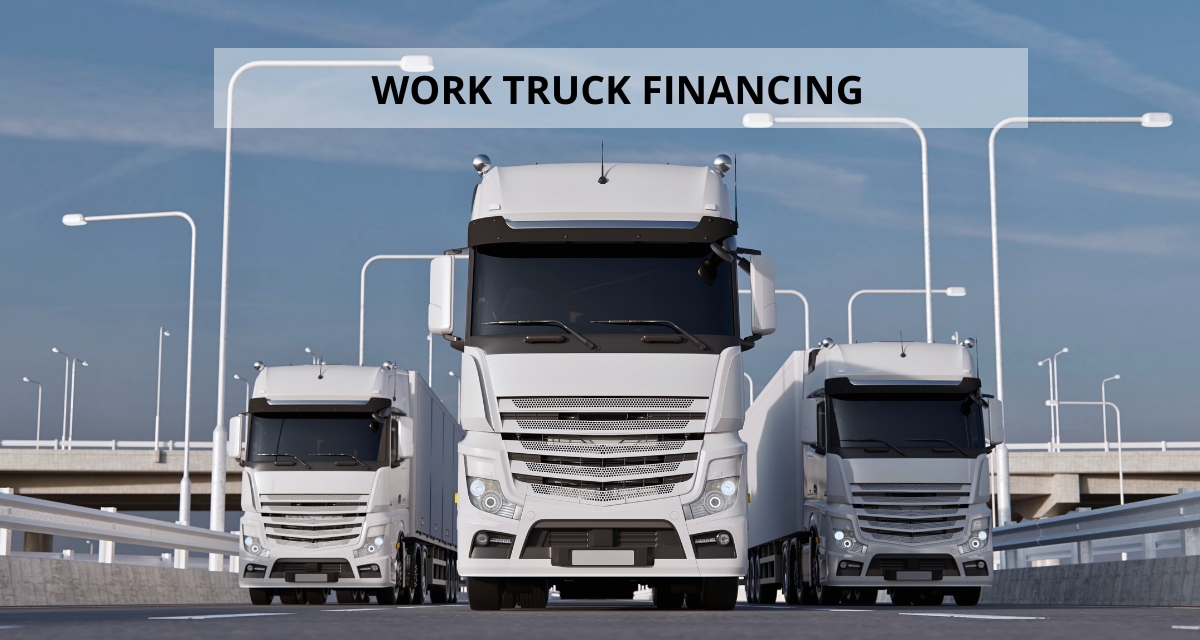
Work Truck Financing: Flexible Solutions for Fleet & Local Operators

work Truck financing

Work Truck Financing: Flexible Solutions for Fleet & Local Operators

Work truck financing turns the cost of a pickup, van, or box truck into a payment sized to what that vehicle brings in, not what’s sitting in a business checking account. A new half ton pickup like the Ford F-150 starts around $40,000, and a Ford Transit cargo van runs $48,400 to $50,600 before a single shelf or ladder rack goes in.

Buying either one outright ties up cash most contractors and delivery operators need somewhere else: payroll, materials, fuel. Dimension Funding finances work trucks for businesses across the U.S., whether that means one replacement pickup or a dozen vans added at once. 

It’s worth checking what the payment looks like before a purchase eats into cash you need elsewhere. Loan and lease terms run up to 60 months, with approval possible from the application alone on amounts up to $250,000.

Electronic signatures mean funding can go through the same day, so a truck spotted this morning doesn’t have to sit on the lot while paperwork catches up.

What Work Truck Financing Covers

Most work truck purchases run through one of two structures. A loan builds toward owning the vehicle outright. A lease spreads the cost of using it over a set stretch of time instead. Either applies whether you’re financing a single pickup or matching vans to a growing service contract.

Dimension Funding has financed commercial vehicles since 1978, long enough for its underwriting to account for how local operators buy in practice. One truck when a contract lands, three more once the crew grows, not a fixed replacement calendar.


Loan

Lease

Ownership

Yes, once paid off

Not automatic

End of term

Truck owned outright

Return, buy out, or upgrade

Best fit

Trucks run for years

Trucks likely to be rotated

Payment basis

Reflects the full purchase price

Reflects the value used during the term

How a Work Truck Loan Works

The lender covers the purchase price and you repay it in fixed installments. The truck is yours from the day the loan closes, subject to the lender’s lien until the balance clears, with no return process or buyout decision waiting at the end.

How a Work Truck Lease Works

Lease pricing runs against the truck’s value over the term, not its full purchase price, so two trucks with the same sticker can carry different lease payments. At the end of the term, you return the unit, buy it at a set price, or move into something newer.

Wanting the same van on service calls for the next eight years is a different problem than running a courier fleet that turns over every two years to stay under warranty. Match the structure to that difference, not the smaller payment.

Why Work Truck Prices Push Operators Toward Structured Payments

What Pickups, Vans, and Box Trucks Cost

Body style moves the price more than the badge on the grille. Compact and midsize pickups start lower: the Ford Maverick at $29,840, the Ford Ranger XL at $32,720. Full size trucks land higher, with the GMC Sierra 1500 Pro at $39,595, the Chevrolet Silverado 1500 from $39,695 to $74,595, and the F-150 XL near $40,000, according to CarGurus’ 2026 pricing roundup.

Cargo vans run higher still. The Chevrolet Express and GMC Savana start around $42,200, the Ram ProMaster runs $46,370 to $51,725, the Ford Transit lands between $48,400 and $50,600, and the Mercedes Sprinter 3500XD starts at $59,860, per Cars.com’s 2026 model listings. Box trucks trade in a wider band. 

Used units three to seven years old run $12,100 to $24,000. Newer trucks run $30,000 to $41,000, and most buyers shop between $15,950 and $27,500, according to PriceItHere’s box truck pricing data.

What Upfitting Adds to the Financed Amount

Trucks rarely stay bare for long. A standard box truck liftgate runs $3,500 to $8,500 installed, and a heavy duty cantilever or rail model can reach $15,000 to $25,000 once wiring, hydraulics, and body reinforcement are factored in, according to The Upfit Insider’s liftgate cost guide.

Buy a $35,000 box truck with an $8,000 liftgate, and the financed amount is closer to $43,000, not $35,000. Roll that cost into the same loan or lease, and the payment reflects the truck as it’ll be used, not the bare chassis.

What Shapes Your Monthly Payment

Truck Type and Term Length

Term length should track how the vehicle gets used. A pickup running light errands can hold up fine over 60 months, while a box truck logging highway miles daily is often due for replacement before a longer term runs out. Dimension Funding sizes terms up to 60 months so the schedule follows the job.

New Condition vs Used Condition

Mileage tells a lender more than the model year does. A three year old van with 80,000 miles on it has less working life left than a five year old pickup that mostly sat between job sites, and financing terms tend to follow the odometer more closely than the title.

Credit Profile and Business Documentation

Banks often want two years of tax returns before they’ll even discuss numbers. Dimension Funding can approve work truck purchases up to $250,000 from the application alone, which matters most for a business that hasn’t been open long enough to build the paper trail a bank typically asks for.

Fleet Scale vs Single Truck: How the Financing Picture Is Shifting

Commercial van sales tell a mixed story so far in 2026. Ford Transit still leads with 91,868 units sold through July, up 2.63 percent, while Mercedes Sprinter climbed 37.36 percent to 17,884 units, according to GoodCarBadCar’s tracking of van sales. Ram ProMaster fell 21.68 percent over the same stretch, and roughly 500,000 commercial vans sell in the U.S. every year.

Financing is following that volume. The commercial vehicle financing market is valued at $123.39 billion in 2026 and is projected to reach $171.54 billion by 2031, a 6.81 percent annual growth rate, according to Mordor Intelligence’s market analysis. Light commercial vehicles, the pickups and vans under 3.5 tonnes most work truck fleets run, account for 45.61 percent of that market, pushed higher by e-commerce and delivery demand.

Matching the Structure to How You’ll Use the Truck

Sticker price settles less of this decision than most buyers expect. A few concrete details about daily use settle it instead:

  • Contract length matters. A three year delivery contract points toward a lease that ends when the contract does, while an open ended service route points toward a loan.
  • Mileage adds up differently by body style. A courier van can log 30,000 miles a year. A pickup running between job sites might see a fraction of that, and the two depreciate on different clocks.
  • Upfit reuse plays into it too. A liftgate or shelving package that carries over to a replacement truck tilts the math toward owning, since it doesn’t have to be pulled out and reinstalled every lease cycle.

Running the same pickup on daily service calls for years usually favors owning it outright, while sizing a fleet up and down as contracts come and go favors leasing instead. Guess wrong here and the fallout is modest: a little flexibility you paid for and didn’t need, or a truck still on the road a year longer than planned.

Getting the Truck On the Job Instead of the Lot

Sitting on a lot waiting for an upfit or a signature, a truck isn’t putting a dime toward its own payment. The financing clock starts regardless, so every day before the first job or delivery run is time it needs to make up later.

Dimension Funding can walk through loan and lease numbers for your specific truck, van, or box truck order before anything gets signed, so the term matches the work it’s buying into. Contact the team to talk through the numbers.

Frequently Asked Questions

Can I finance a used work truck, or only new ones?

Most equipment lenders finance both new and used work trucks. Used box trucks between three and seven years old typically run $12,100 to $24,000, well under new pricing, so buying used is a common way to keep the payment down rather than a fallback option.

What credit score do I need for work truck financing?

There’s no single score that guarantees approval, since lenders weigh business history alongside personal credit rather than applying a hard cutoff. On amounts up to $250,000, Dimension Funding can often make that call from the application alone.

How long are typical work truck loan or lease terms?

Terms commonly run up to 60 months. The exact length depends on whether the truck is new or used and how long you plan to keep it, since a shorter term suits a vehicle with fewer working years left.

Is leasing better than buying for a single work truck?

Leasing tends to fit better if you expect to upgrade or swap vehicles within a few years. A loan makes more sense when the same truck will run the same routes or jobs for the long haul.

Does financing cover upfitting like shelving, racks, or a liftgate?

Most lenders roll upfitting costs like shelving, racks, or a liftgate into the total financed amount. The payment is meant to cover the vehicle as it’ll be used on the job, not the bare truck rolling off the lot. Confirm this before the order is finalized, since not every lender handles it the same way.

Can I finance a mix of trucks and vans in the same order?

Lenders generally welcome mixed orders, such as pickups, cargo vans, and box trucks bought together for a growing operation, all on a single application. Each vehicle can carry its own term based on its price and condition.

How fast can work truck financing be approved?

Approval can happen the same day when the application and signatures are handled electronically. That speed matters most for a specific used truck that might not last the week.